
Sir Harold Hillier Gardens in winter
You may be familiar with the name Hillier, a leading British nursery based near Winchester, with many Chelsea Flower Show gold medals in its display cabinet. The nursery was established by Edwin Hillier in 1864. His grandson, Sir Harold Hillier bought the site of the Gardens nearby in 1953. A renowned plant collector, he broadened greatly the number of species available for sale in the nursery.
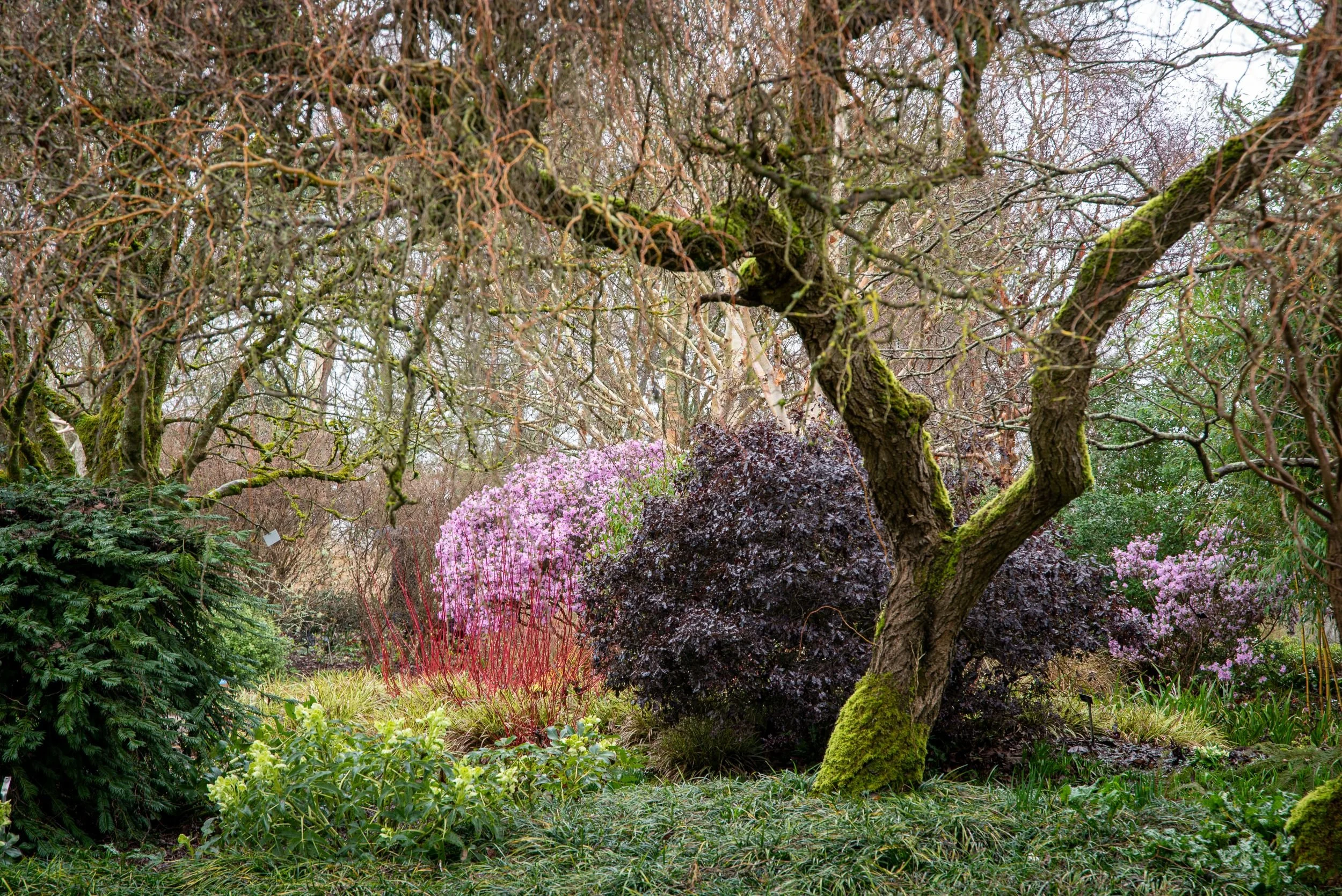
Flowers, stems and bark are all of interest here
His growing collection of plants found their way into his private garden. He also established an arboretum which has an unparalelled collection of oaks, magnolias and conifers. The Gardens are also well known for winter garden, a collection of winter-flowering plants, architectural evergreens, scented shrubs and plants with attractive bark and stems.
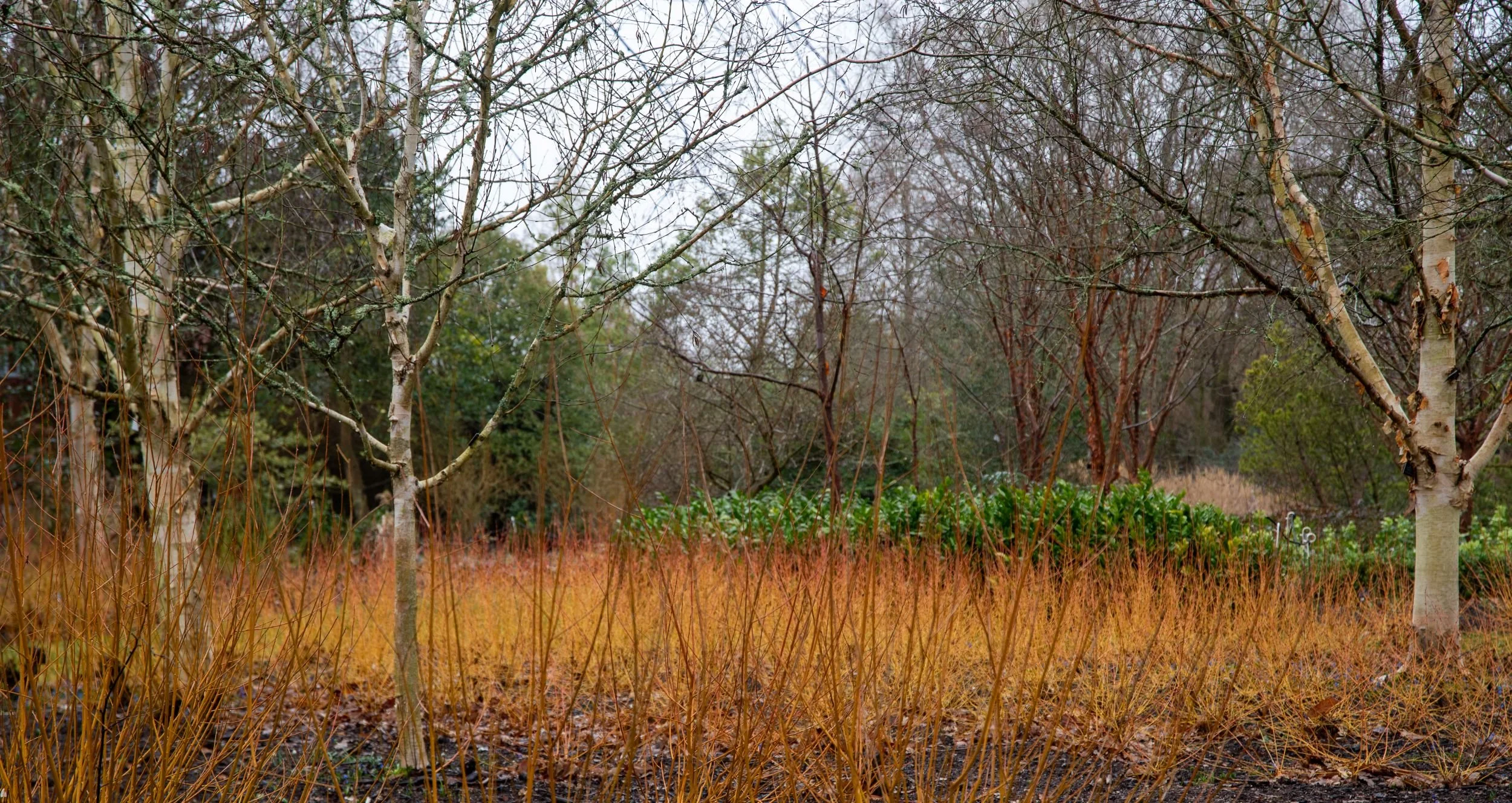
Betula utilis var jaquemontii and cornus
It’s very easy to think of winter as a dead time in the garden. But with a bit of planning the garden can look full of colour, scent and architectural forms, the latter looking especially stunning with a light covering of frost or snow.
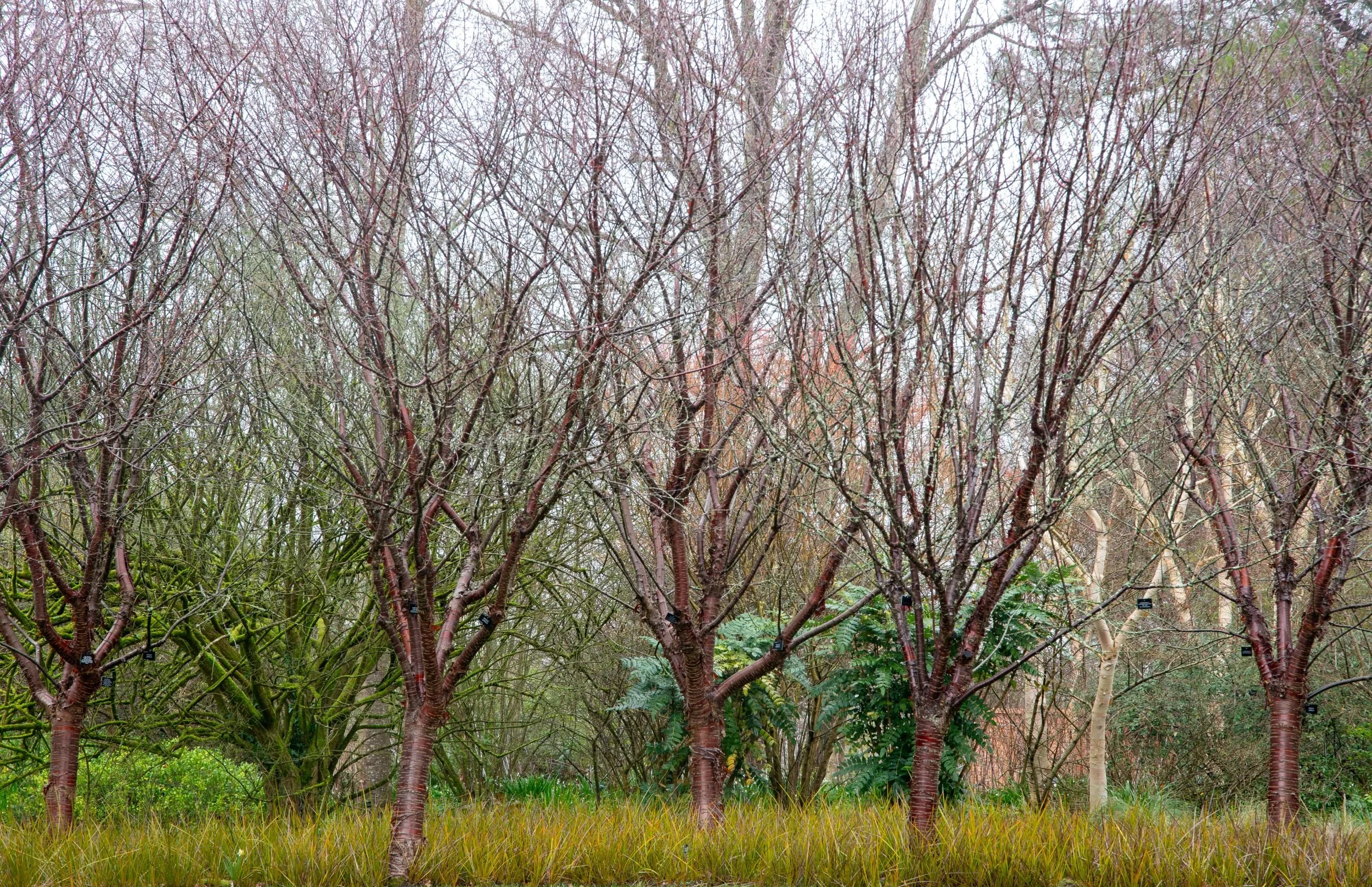
Betula serrula Tibetica and Libertia peregrinans
To begin with you might want to select a tree with interesting bark. The mahogany red of Prunus serrula Tibetica, the bright white stems of designers’ favourite, Betula utilis var jaquemontii or the peeling bark of Betula papyfera or Acer griseum are stunning. Obviously in the Sir Harold Hillier Gardens there is space for several of these trees to be planted together, but even in a small garden one tree will make an impact.
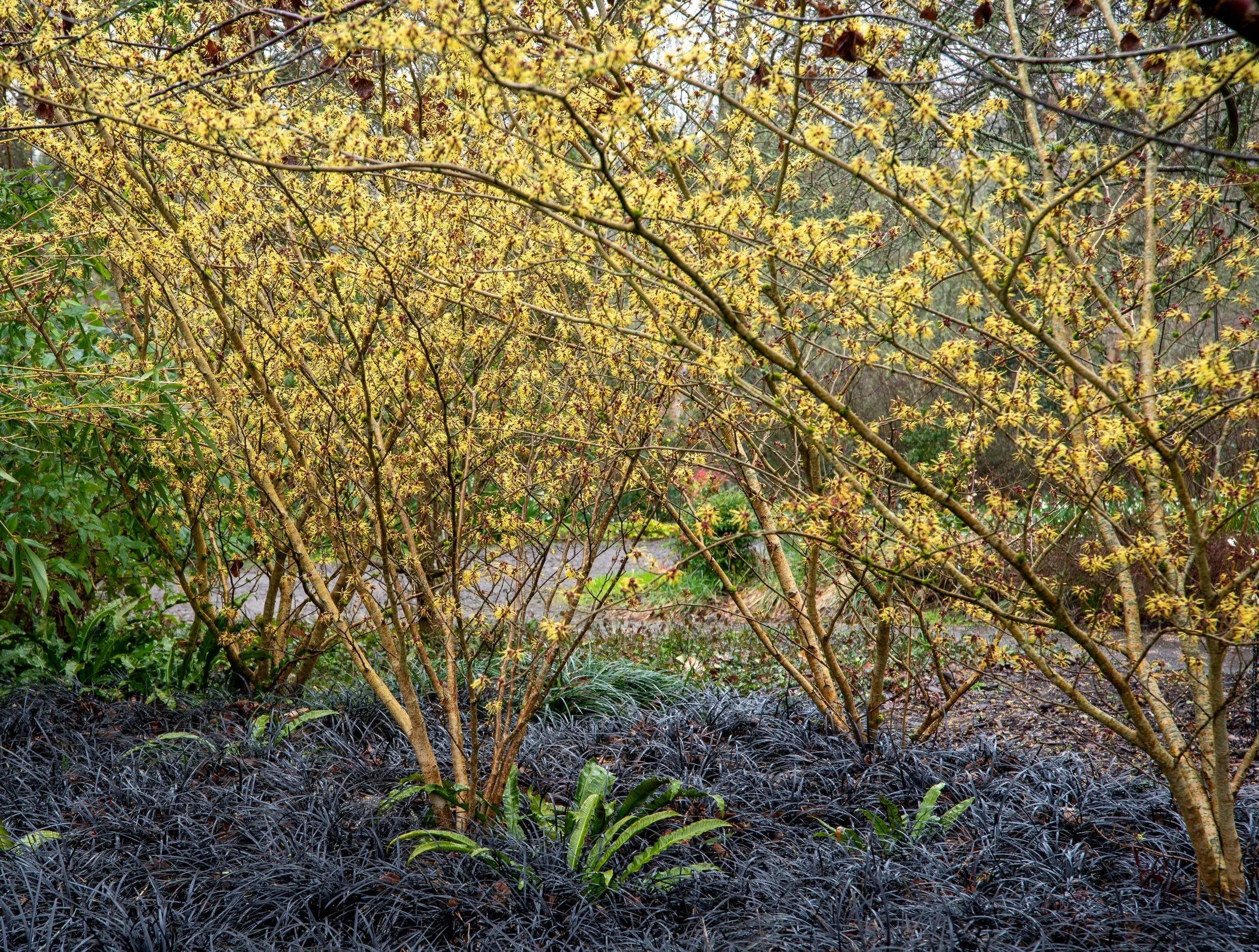
Hamamelis and Ophiopogon planiscapus
Some trees, such as these Hamamelis, produce scented flowers in the winter. They are slow growing but can become very characterful trees with time. Prunus x subhirtella Autumnalis also flowers sporadically through the winter and some magnolias will flower very early in the year.
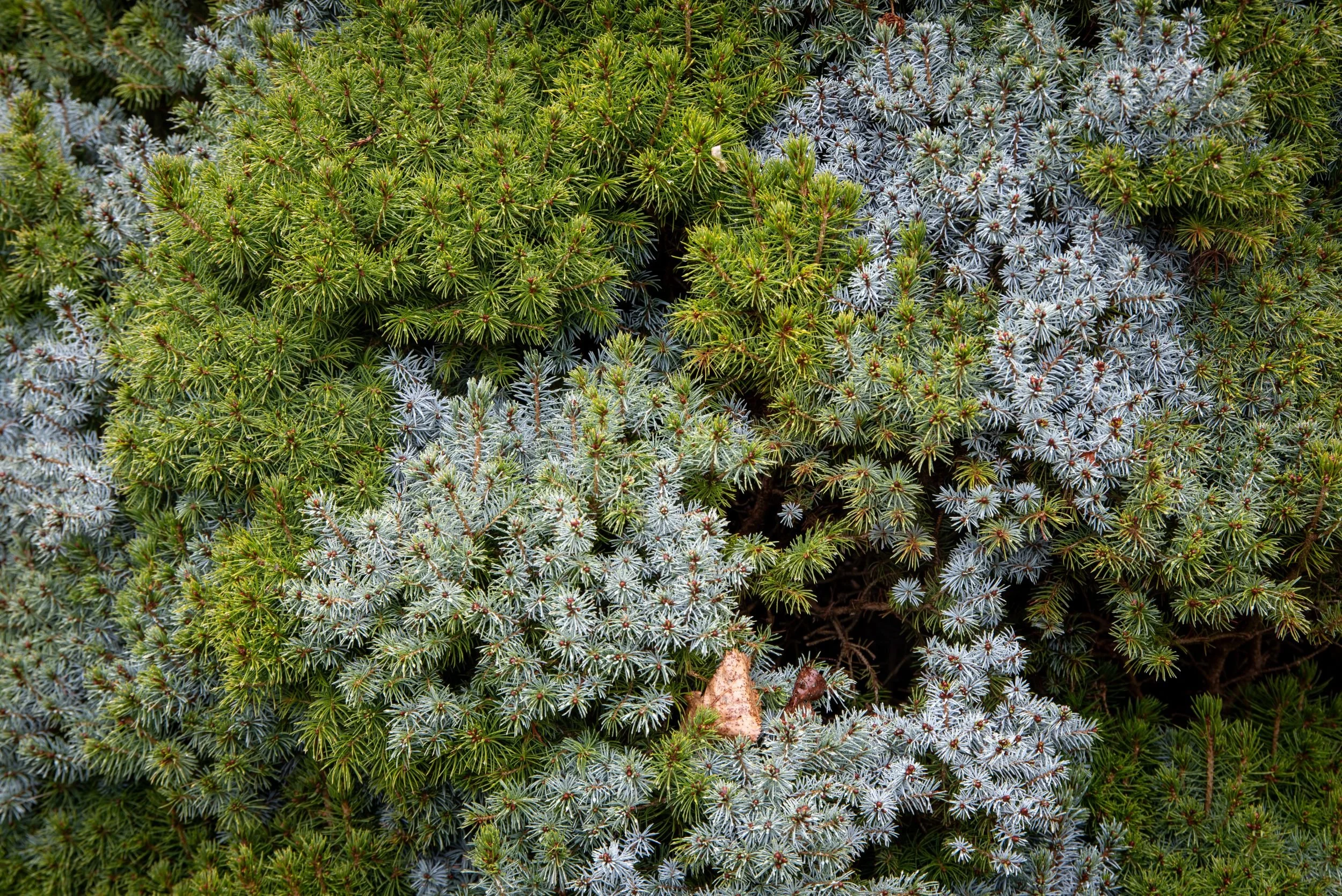
Picea glauca Alberta Blue
Evergreens provide good structure throughout the winter and their needles come in many different colours and shapes. Be careful of the varieties you select however, as the name dwarf doesn’t always mean small, often it just means slow-growing and many conifers can reach sizes that might be a bit too impressive for a suburban garden. Not many conifers adapt well to pruning….
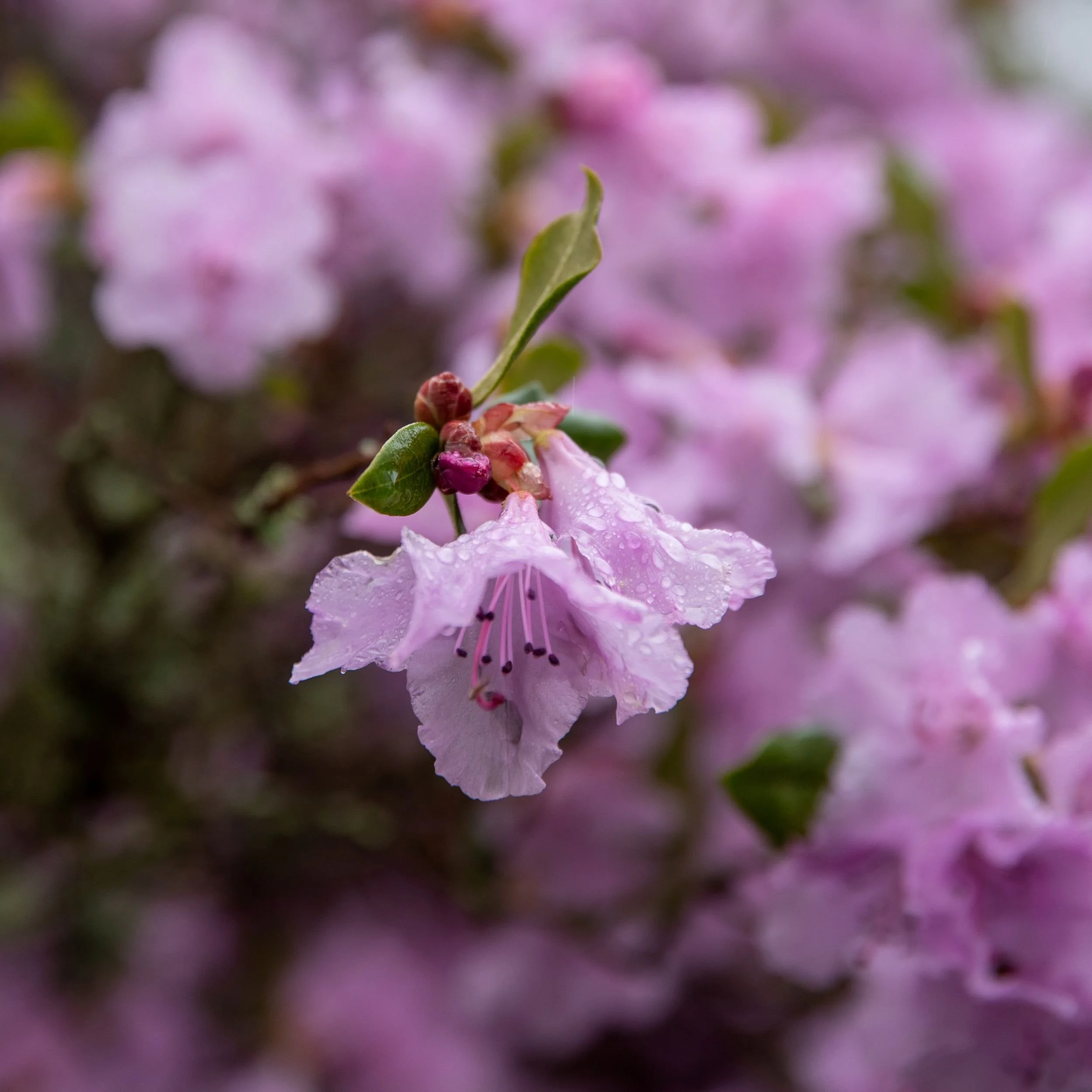
Rhododendron Olive
Many of the winter-flowering shrubs are scented, think of Daphnes, Sarcococcas and some Viburnums. There are also plenty of Camellias. C japonica can grow up to 5 metres in height and generally flowers from late winter to early spring, preferring dappled shade and acidic soil. C sasquana grows to 2-3 metres in height and flowers from autumn to early winter. It is more tolerant of sun and non-acidic soil. Some rhododendrons flower from very early in the year.
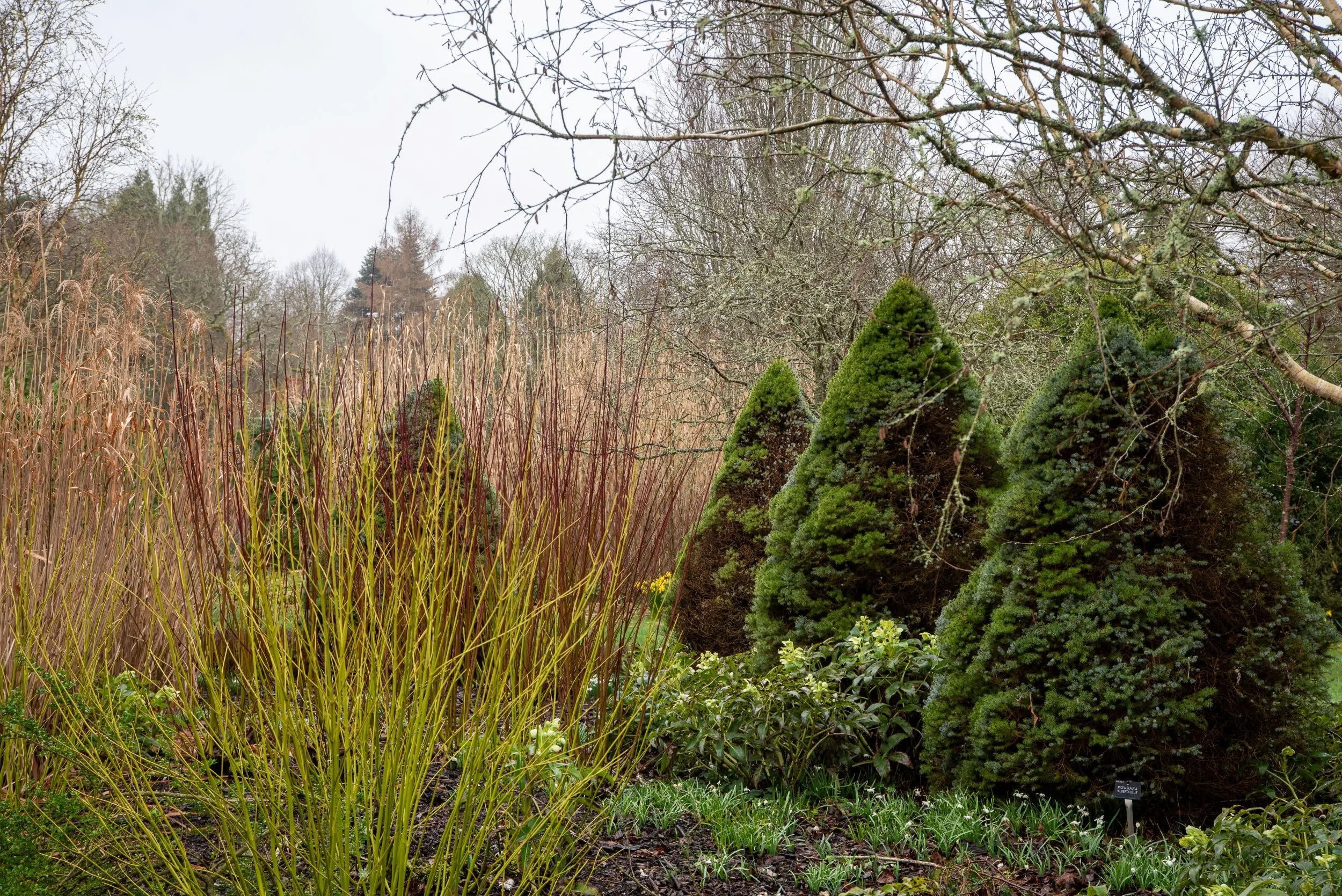
Cornus sericea Flaviramea
It is easy to overlook the bare stems of some shrubs. The most striking are cornus, varying from almost black, through red, orange, yellow and bright green. C Midwinter Fire is an easy one to grow and its orange-red stems stand out from quite a distance. If you only plant a few then keep to the same variety to create more impact. Some willows also have colourful stems but you should check out the growing and pruning requirements before committing to one or several.
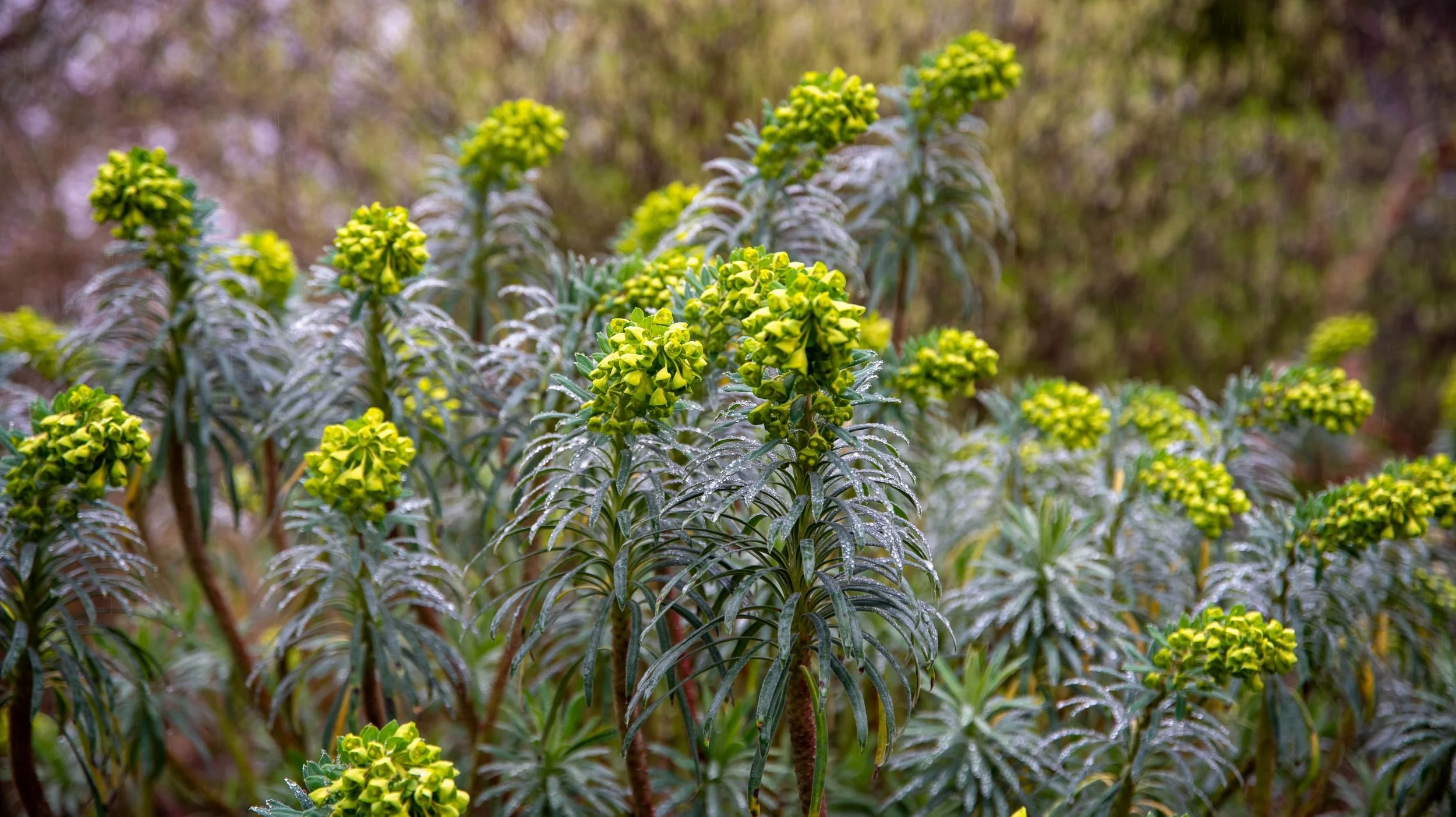
Euphorbia characais wulfenii
When it comes to herbaceous perennials the colours tend to be a bit more muted. The exception to this rule is the brightly coloured flowers of many Euphorbias. A favourite of mine is Euphorbia characais Humpty Dumpty with acid green flowers which really light up a garden on a dull day. Hellebores are an obvious choice, its worth shopping around for the prettier ones which can be surprisingly hard to come by. They self-seed easily.
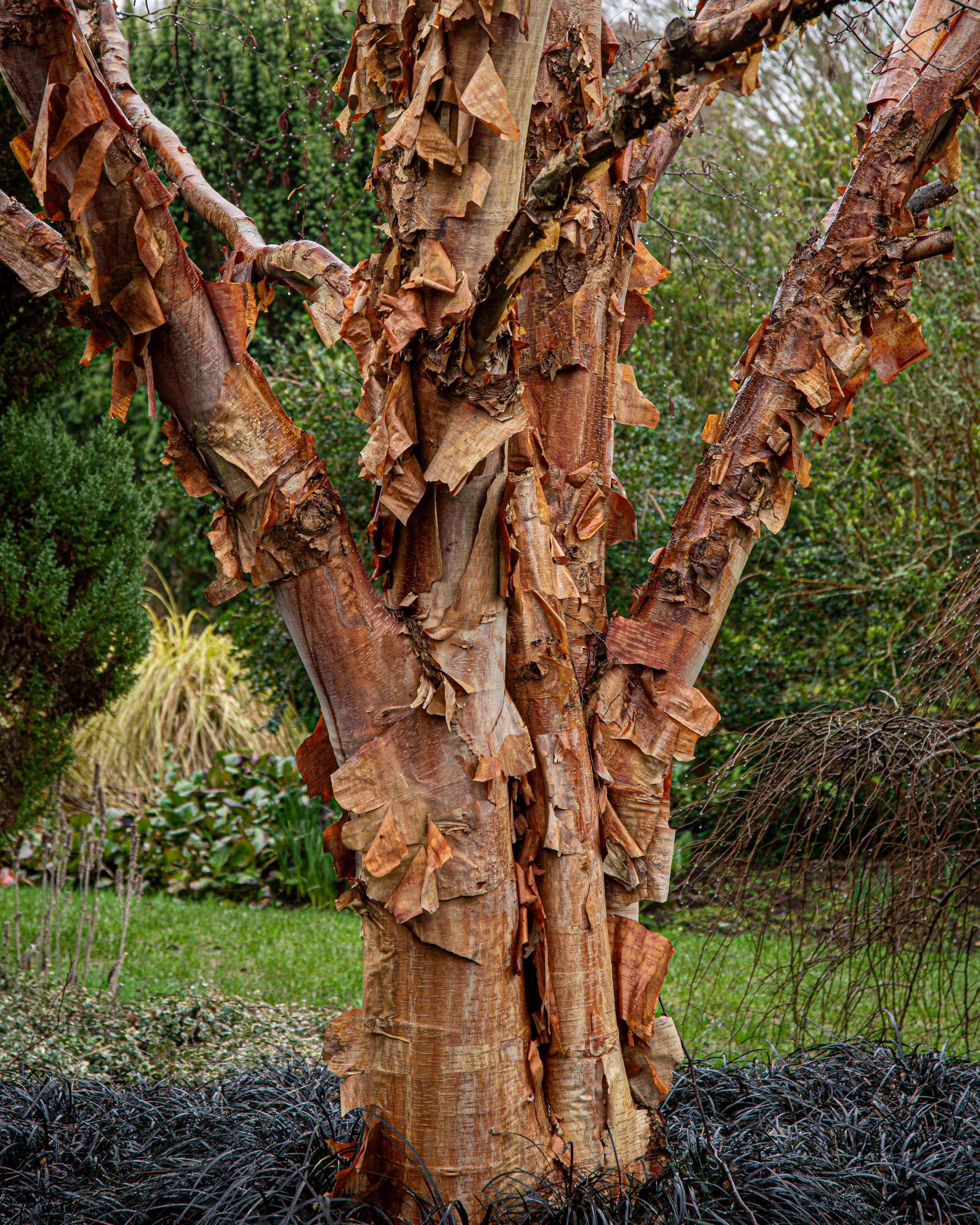
Betula albosinensis Bowling Green
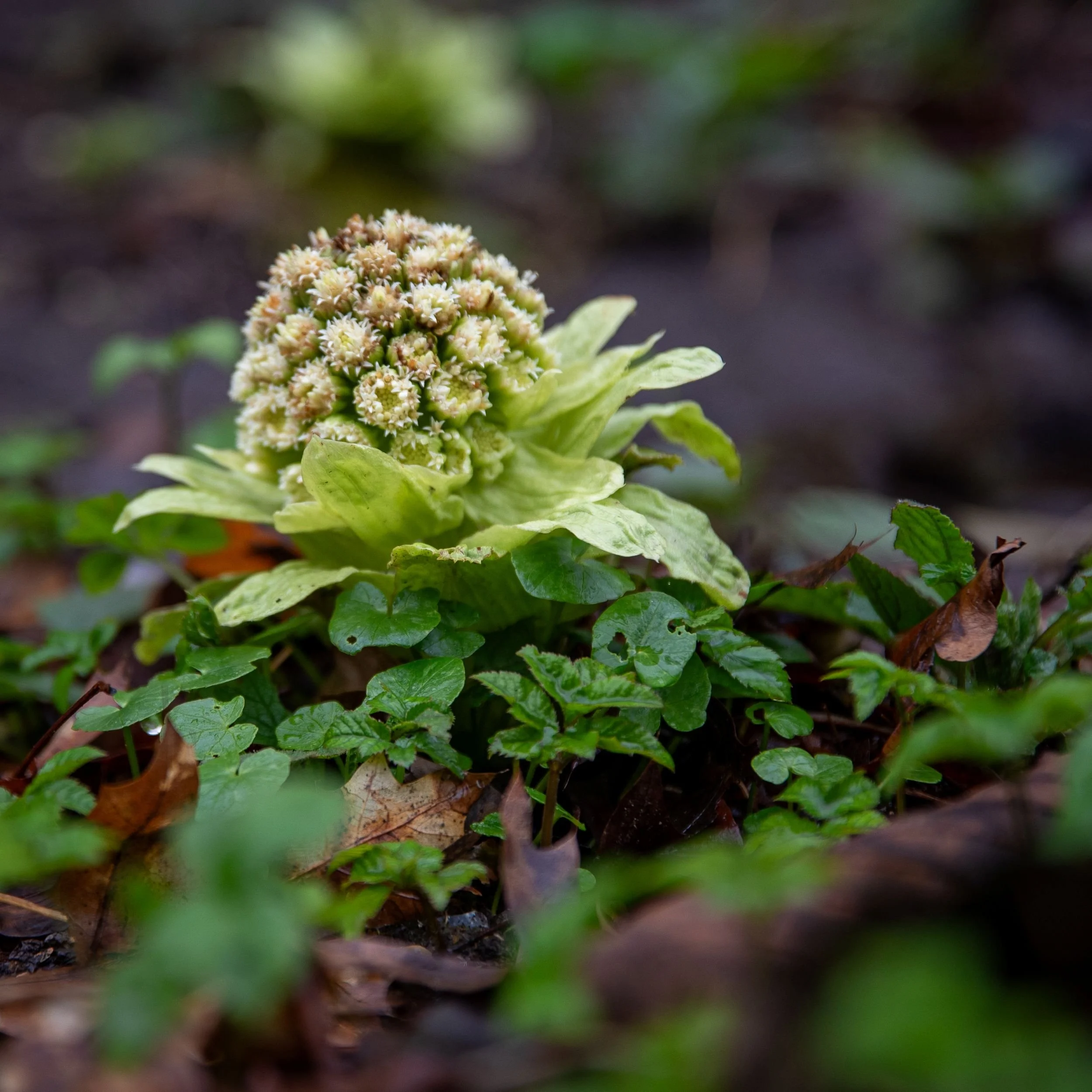
Rheum acuminatum
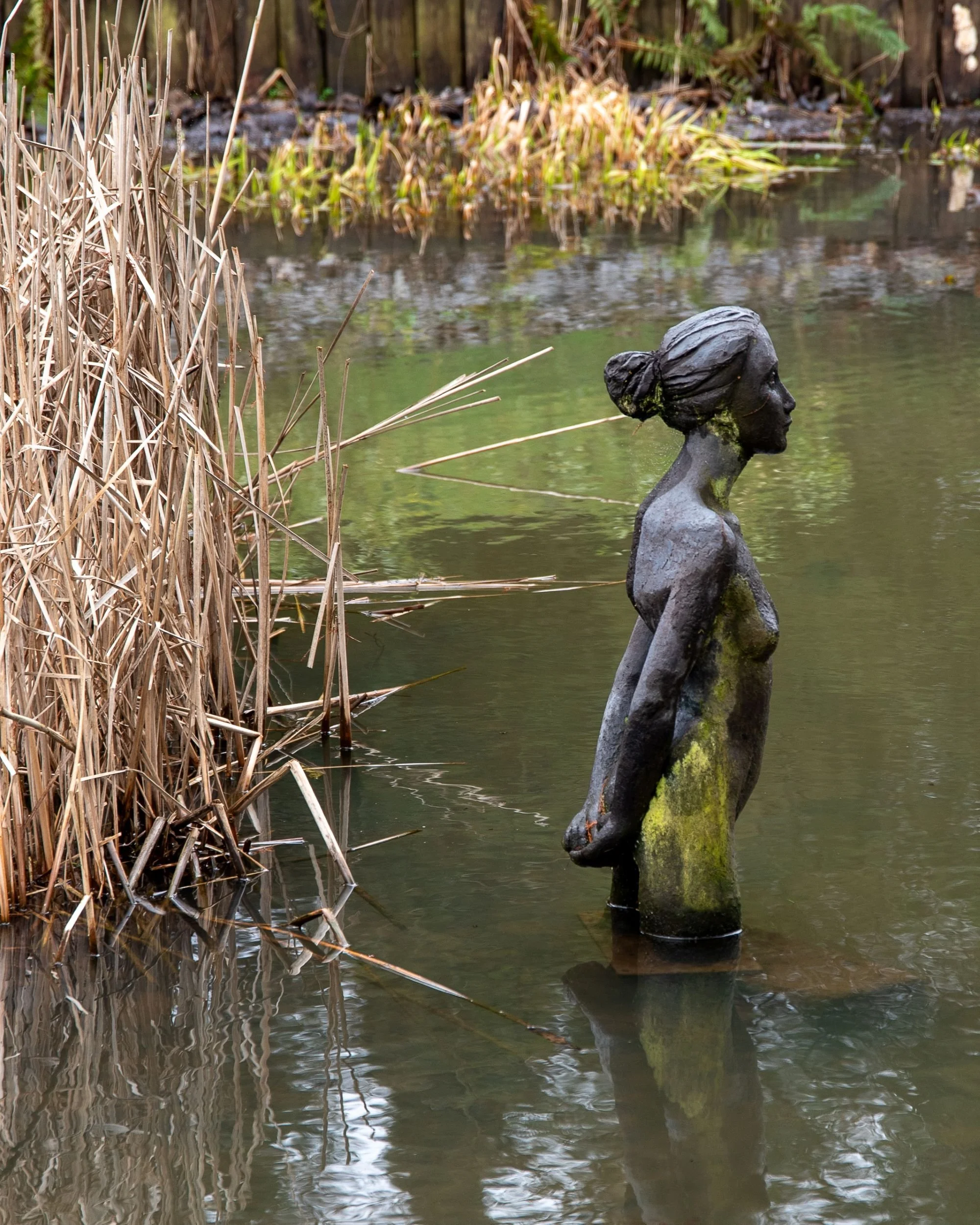
Statue Of A Girl
And finally there are the winter-flowering bulbs and corms. Although mostly tiny, if planted en masse they look spectacular - think snowdrops, winter aconites, cyclamen and early Dutch irises. Some of the minature narcissus can be very early flowering too.
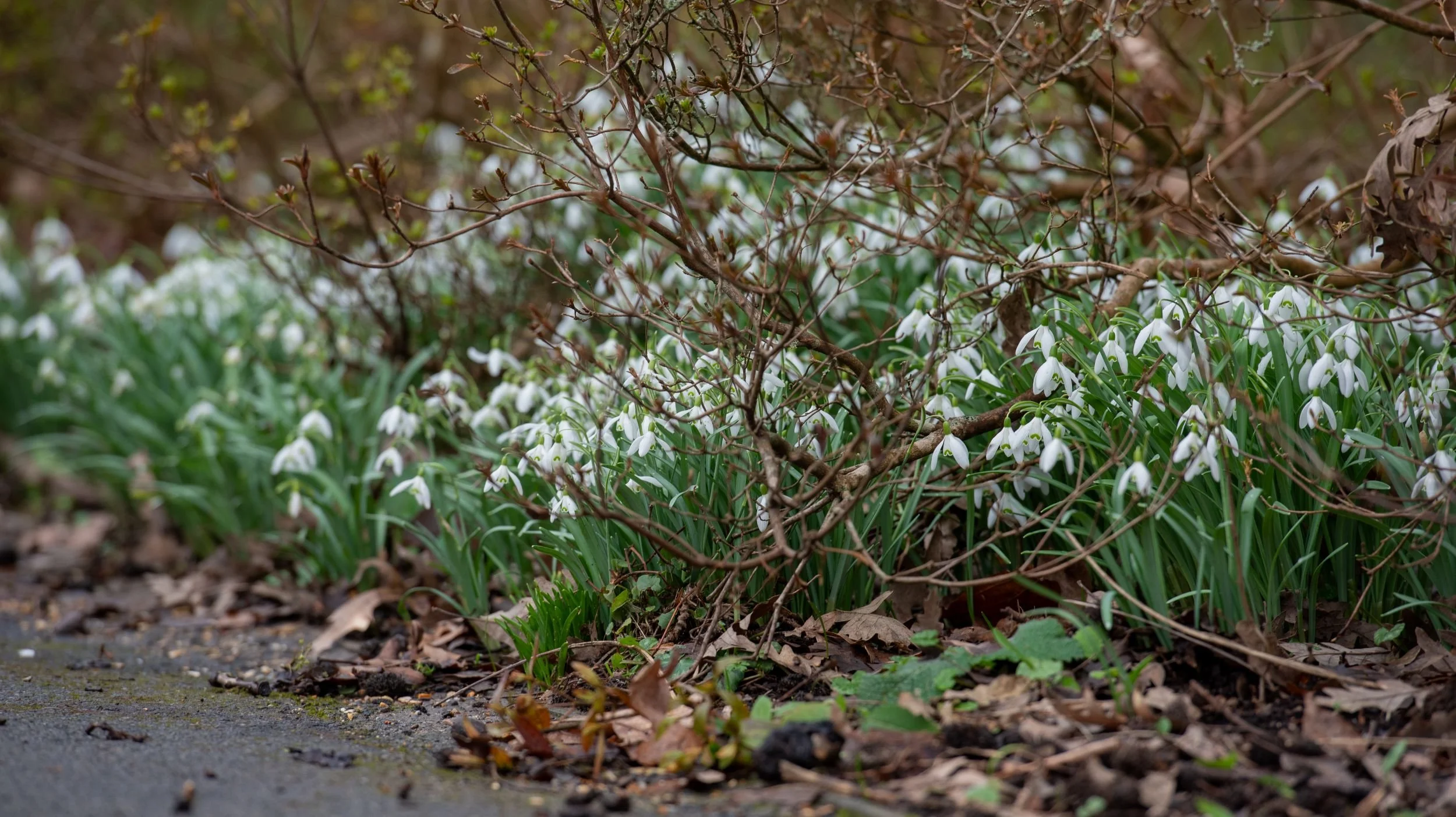
Galanthus
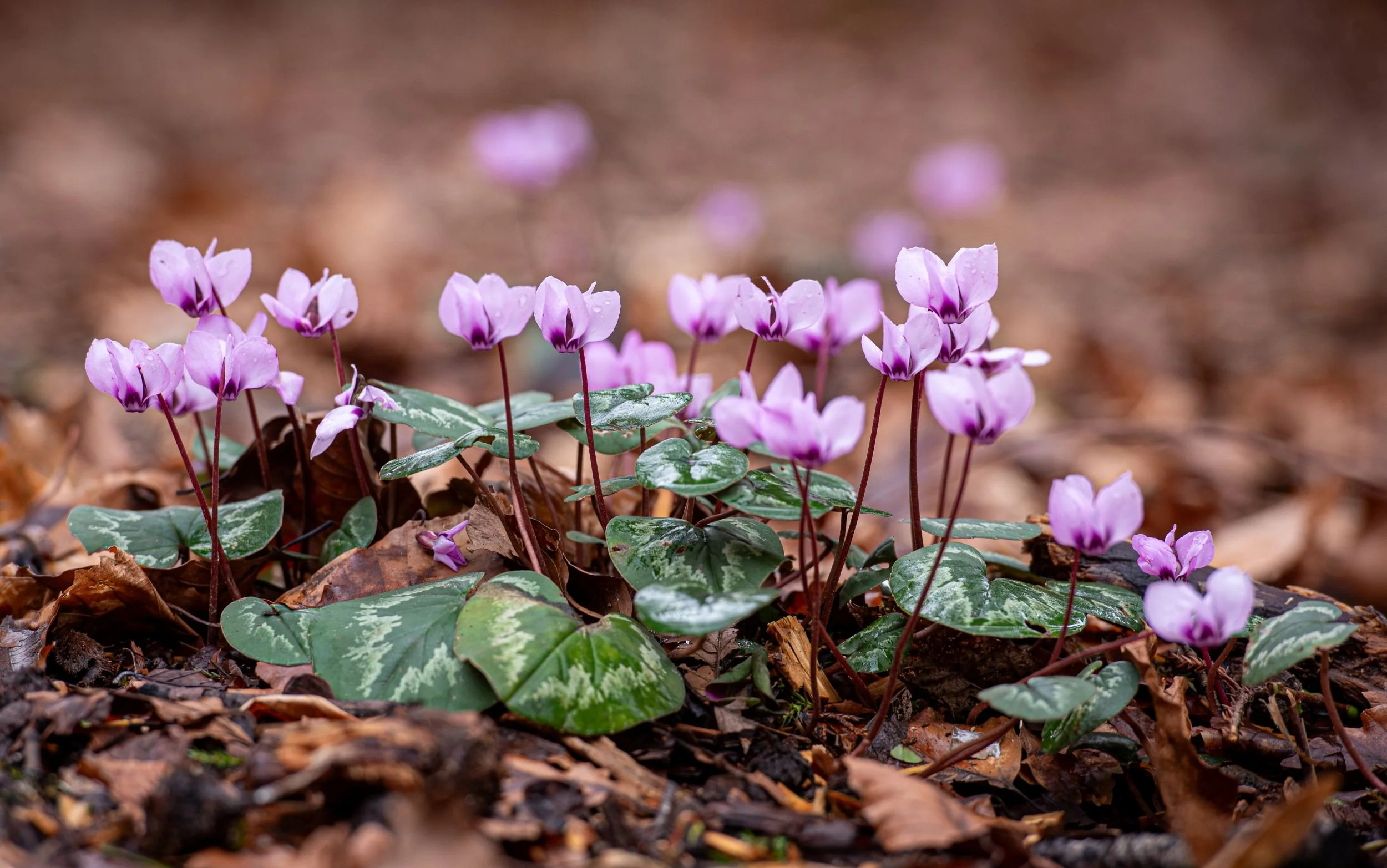
Cyclamen hederifolium
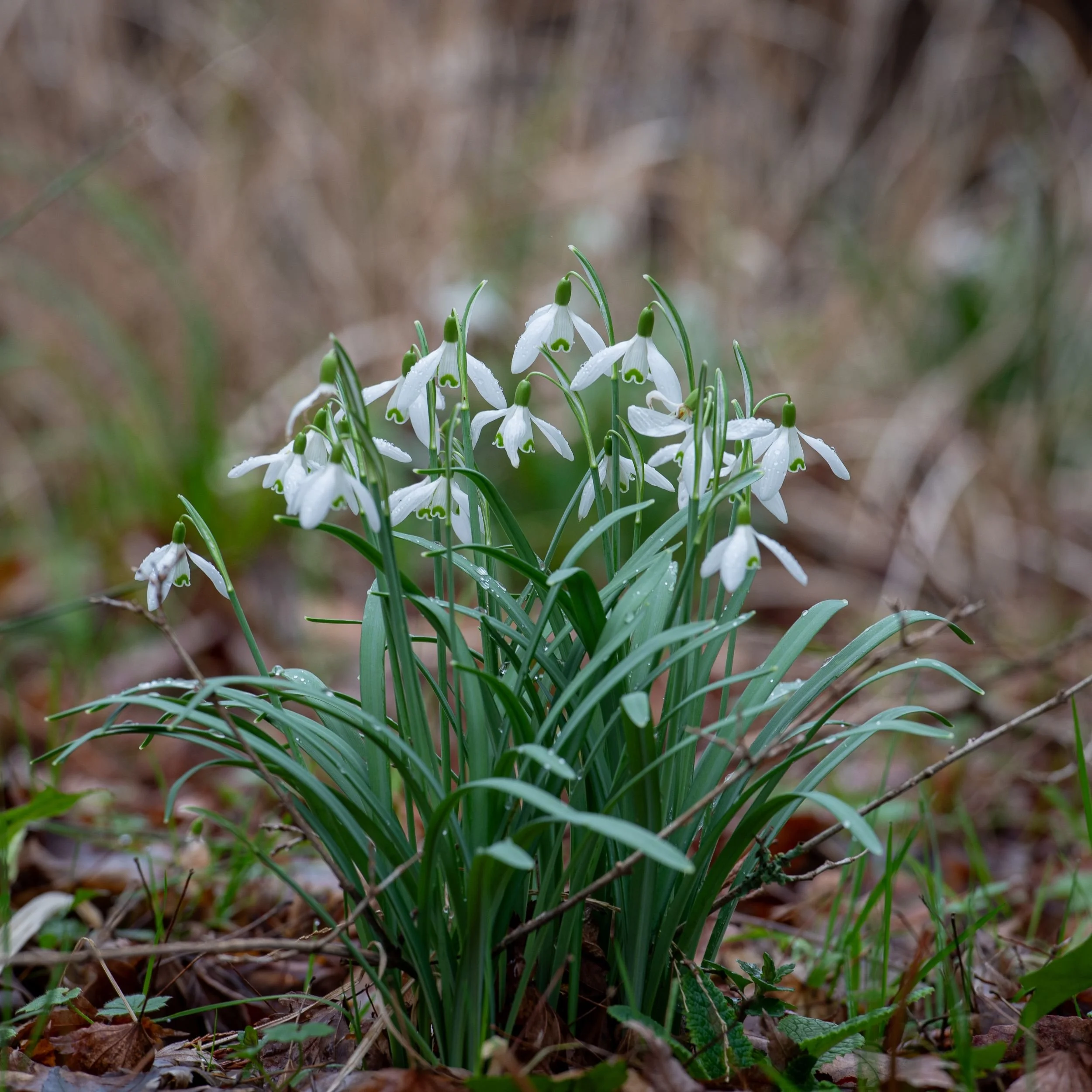
Galanthus
On a damp day in February the Gardens were mostly accessible on solid footpaths. Off the paths it was pretty wet and muddy so waterproof footwear was necessary. There is a cafe, gift shop and plant sale area near the entrance. There is a nicer restaurant further in which did a fab afternoon tea (booking required).
If you are an RHS member you can get in for free (you need your membership card and it is for one person only).
It would be worth visiting throughout the year. I’d particularly like to see the very long Century Border, surely one to rival those at Wisley or Kew.