

The kitchen garden at Chatsworth
If there's ever a place to get kitchen garden envy, it's got to be at Chatsworth House. First off, it's huge. Secondly, there are three full-time gardeners. A stream runs through it, good enough to bottle and sell (and they do), more greenhouses than you can shake a stick at and oh, there's the view...

This bench, at the top of the west-facing sloping kitchen garden, has a good view of the two and a half acres, the top of Chatsworth House and the stable block and the Capability Brown landscape on the other side of the River Derwent. But I didn't think to take a photo of all that, you've just got to take my word for it.
(By the way, my most hated combination of colours is pink, yellow and turquoise, but somehow it seems to work here.)

Like all good kitchen gardens, there are a lot of flowers, grown principally for cutting. Some are also grown as companion plants for the fruit and vegetables. These Sweet William were at their peak in late June (the season seems to be a couple of weeks behind SW London).

The Delphiniums were perfect, no slug damage and no stakes. I think Delphiniums are at their most striking just before the flower buds open completely.

I had never considered Foxgloves as possible cut flowers, but why not? Plus, the bees love them, great for helping to pollinate the fruit and veg.
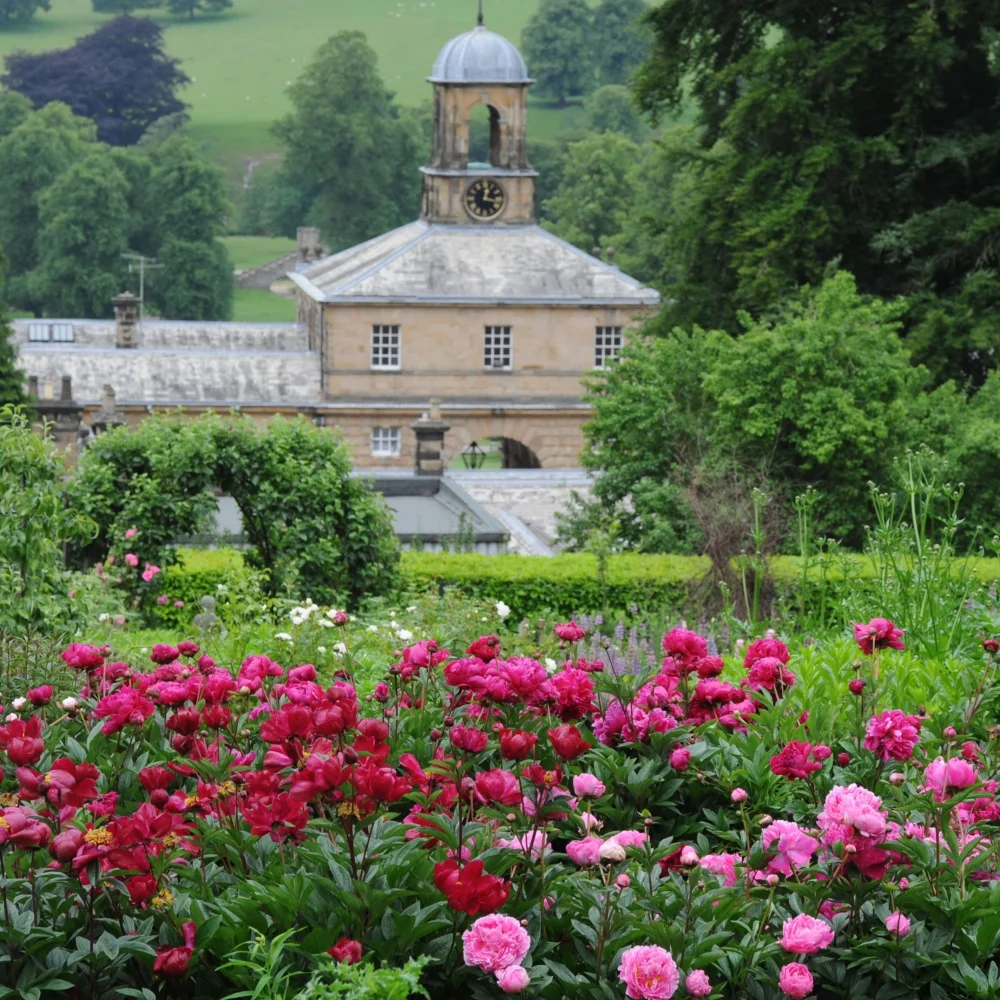
And I've never seen such amazing Peonies in such huge quantities before. These look like Buckeye Belle and Felix Crousse, completely OTT and perfect for midsummer.

Around the edge of the kitchen garden there were stone walls, Yew hedges and odd wildflower invaders, like this Dog Rose. You wouldn't weed this out would you?

The heart of the kitchen garden though is the fruit and vegetable area. All the produce goes straight to the house. The large greenhouses keep the house supplied with grapes, melons, lemons and even fresh ginger. The cold frames ensure salads have an early start.
And of course it wouldn't be a kitchen garden without the head gardener's bothy. This one has been preserved from WWII, complete with a copy of Dig for Victory, an old stove, terracotta pots and string. All gardeners need string.

The herb garden is extensive and contains interesting varieties like banana mint which tastes nothing like banana or mint. This Thyme was nice though.

Did I mention the Delphiums were good?

So, I know you're dying to know how the tea and cake were. Frankly, your best bet is to buy the cake from the Chatsworth Farm Shop (and the rest of your picnic as well - I can recommend the filled rolls and the Scotch Eggs deserve a special mention) and take a flask of your own tea. The garden is huge (we were there for four hours and didn't see it all). The Farm Shop stuff is much better (and cheaper) than anything they sell at the house, and the queues are shorter.
Next month - That trout stream - did Dan Pearson's Chelsea garden do it justice?
Chatsworth House - http://www.chatsworth.org/
The Farm Shop - http://www.chatsworth.org/plan-your-visit/shop-and-eat/chatsworth-estate...
The visit to Chatsworth House was at the end of a fab weekend with Desna, Rob, Sarah and Logan the dog.

Hauser & Wirth
Durslade Farm in Bruton, Somerset, is the latest outlet for the international art dealers Hauser & Wirth. In 2013 they commissioned Dutch plantsman Piet Oudolf to design a garden for the gallery. The plants were supplied by our favourite nursery, Orchard Dene, and the garden was planted in the spring of 2014, one of the wettest on record.

Those of you familiar with Oudolf's style will not be surprised to see huge borders of long-flowering perennials with little in the way of traditional structural plants like evergreen shrubs. For those of you not familiar with his style the garden can appear unstructured and lacking in focal points. There tends not to be the huge summer climax followed by assiduous cutting back, pruning and tidying that we are used to in traditional English gardens.

Rather the garden starts slowly in the spring. But once the perennials get going there is wave after wave of billowing flowers and grasses. As summer moves into autumn the seed heads of faded flowers start to predominate. Rather than cut them back Oudolf leaves the seed heads to stand as long into the winter as possible. Indeed, Oudolf selects his plants as much for the way they move into senescence as he does for their colour in high summer.
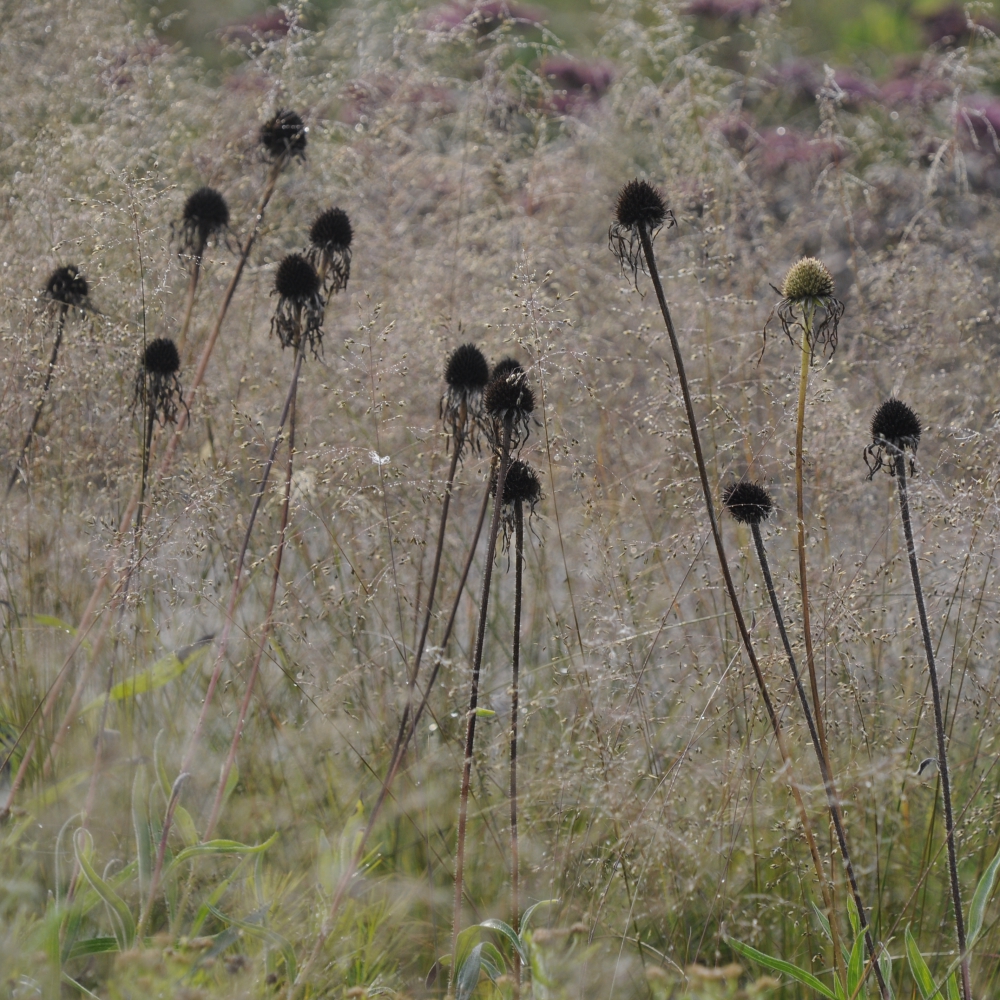
September marks a shift in focus from colour to form. Here we can see the seed heads of Echinacea pallida silhouetted against the still frothy flowers of Deschampsia. Oudolf is not obsessed by mixing and matching colours but by combining shapes and textures.

There are few tradtional English gardeners who would put orange and pink in the same view but here Oudolf is contrasting the cone shaped flowers of Helenium Moerheim Beauty with the flat heads of Sedum matrona with some fluffy Pennisetums and amorphous Asters.

This way of designing with plants has been termed "The New Perennial Movement" and Oudolf is its pre-eminent practitioner. The most notable way of imlementing this idea is with "block" planting - single species in large groups to make a big impact. As an idea it has been going longer than I've been a garden designer and it has influenced my own planting design.

Oudolf's ideas have not remained stuck in a rut however. He has picked up on the scientific developments in matrix planting. This is based on the work carried out primarily at Sheffield University by Professors James Hitchmough and Nigel Dunnet and also by Dr Noel Kingsbury.

Matrix planting combines plants that do not compete with one another. They may flower at different times and have completely different forms and, to a certain extent, different requirements in terms of light and water. A lot of their research was brought to bear on the summer meadow planting at the Olympic Park in 2012. Matrix planting produces more of a tapestry effect and at Hauser & Wirth Oudolf has used block planting in some borders and matrix planting in others, to great effect.

Enough of the garden design theory. It was a beautiful day when I went with friend and fellow designer Lisa Cox. There was thick fog most of the way from London but it was just starting to lift as we arrived. The garden didn't open until 10am so we had to amuse ourselves with second breakfast and a walk around the gallery.

The sun was hazy and at a low angle, perfect autumn weather. Its always a difficult balance between looking at the whole garden, taking it all in, and looking at parts of the garden through a lens.
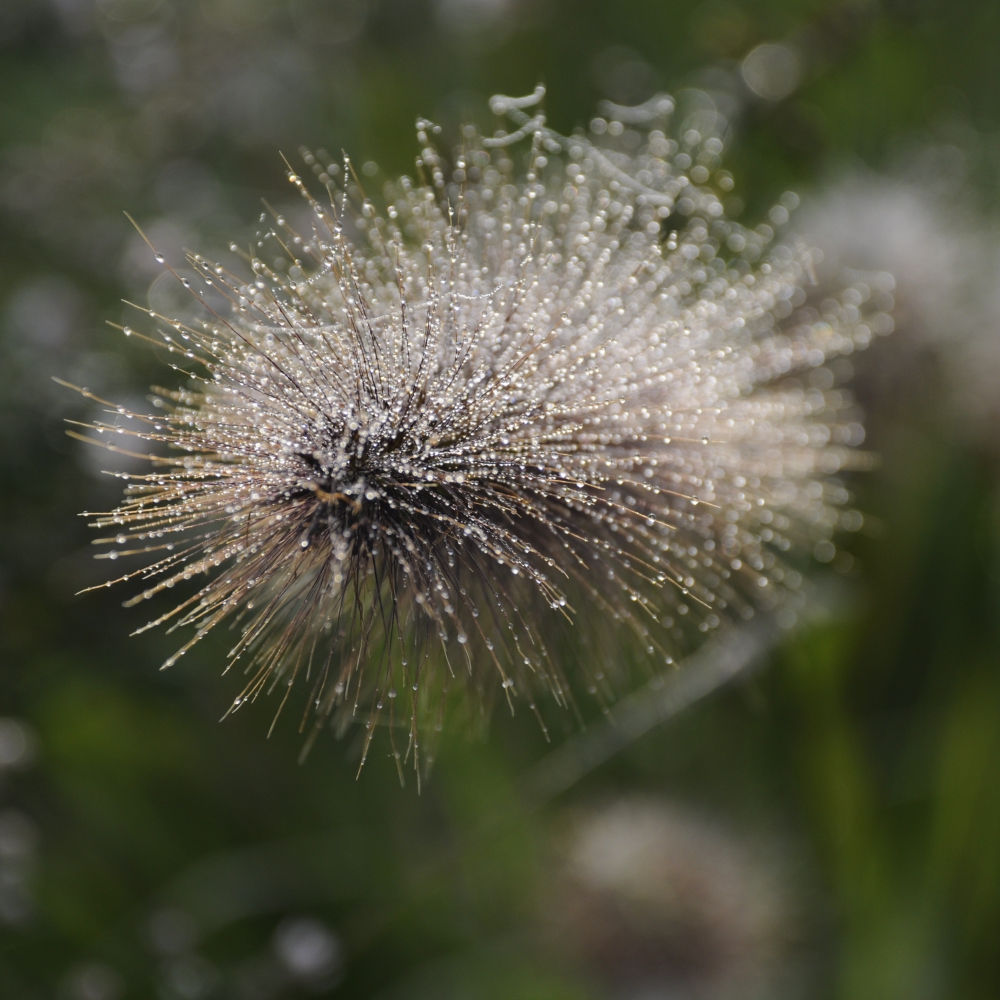
Photography does focus your concentration though and makes you look at things you might miss on a broad sweep across the garden. However, it does also mean that people don't always recognise the garden you are photographing as they are not looking at it in the same way.

Taking photos does highlight some peculiarities. For example, I took this one of Verbena bonariensis. Beloved of New Perennial designers and these days ubiquitous, I suddenly realised that this was the only one in the whole garden. Surely this wasn't intentional? A mistake then - but by whom? Or is it a joke? We also saw one lone Lobelia...

Hauser & Wirth in Somerset is primarily concerned with art. There is some sculpture outside, some more successfully placed than others. The giant clock in the garden is a bit wierd I think but the spider in the courtyard is striking. There is a book shop and of course, a cafe and restaurant.

As we were there early there was time for second breakfast of coffee and toast and jam. Reasonably priced, tasty and in an art-filled cafe, I enjoyed it all. The farm buildings have been restored in a fabulously rustic/trendy style - lots of concrete, wood, clay tiles and old brick walls.
The Hauser & Wirth experience is not to everyone's taste of course, one client described it as "a pretentious place, nasty art and not at all my idea of a garden!". I can't do anything about her taste in art but I do hope she'll go back and have another look at the garden.
Hauser & Wirth Somerset - http://www.hauserwirthsomerset.com/garden
Orchard Dene Nurseries - http://www.orcharddene.co.uk/