
Queen Elizabeth II Garden
The Queen Elizabeth II Garden in London’s Regents Park opened on 27 April 2026, the 100th anniversary of the late queen’s birth.
The garden has been built on the site of the park’s old glasshouses. The history of the site has been preserved with one of the glasshouse ventiliation towers and the concrete bases of the old glasshouses crushed and reused for pathways and mulch in the garden.
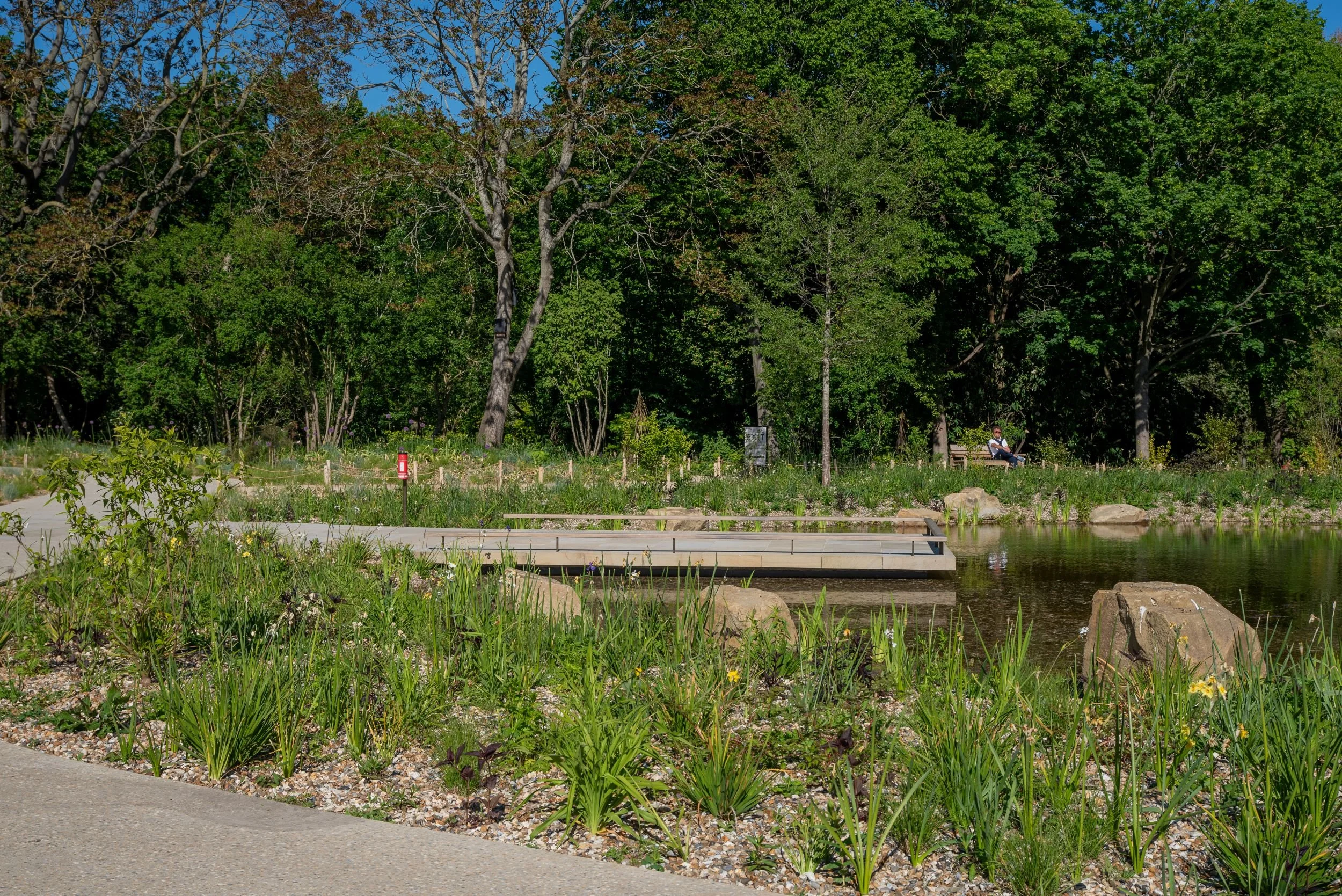
The garden was commissioned by The Royal Parks and designed by Dr Noel Kinsbury in association with HTA Group. Both the layout of the garden and the focus on biodiversity and sustainability reflect the service and interests of Queen Elizabeth.
The straight path that runs through the garden represents the late Queen’s loyalty and service with each end offering a moment of quiet reflection. At the southern main entrance, visitors are greeted by a large pond complete with seating and a pergola.
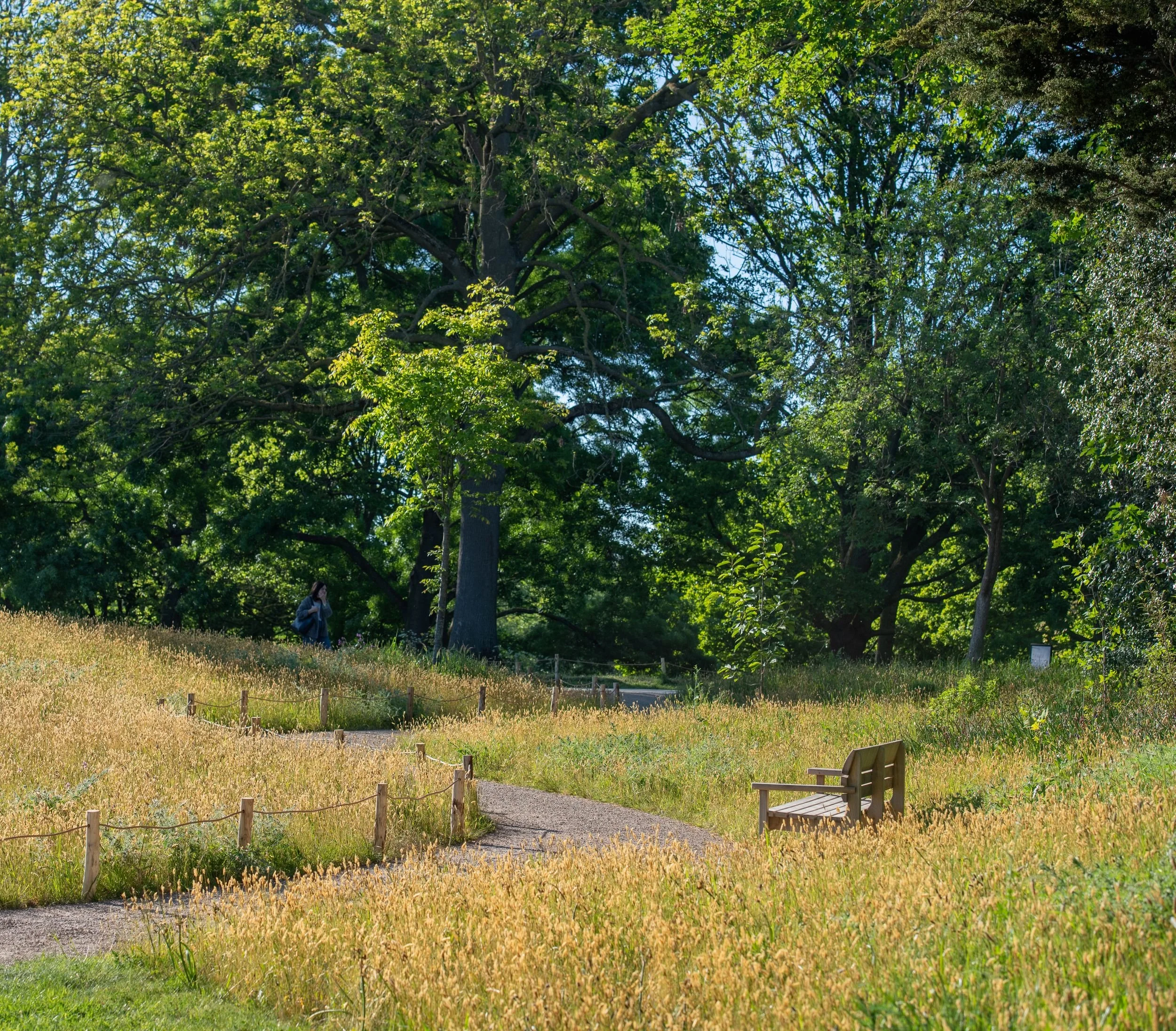
The central promenade is bisected by a meandering path which leads visitors through a series of beautiful landscapes. A network of small-scale informal paths allows visitors to wander through the planting and explore the garden further.
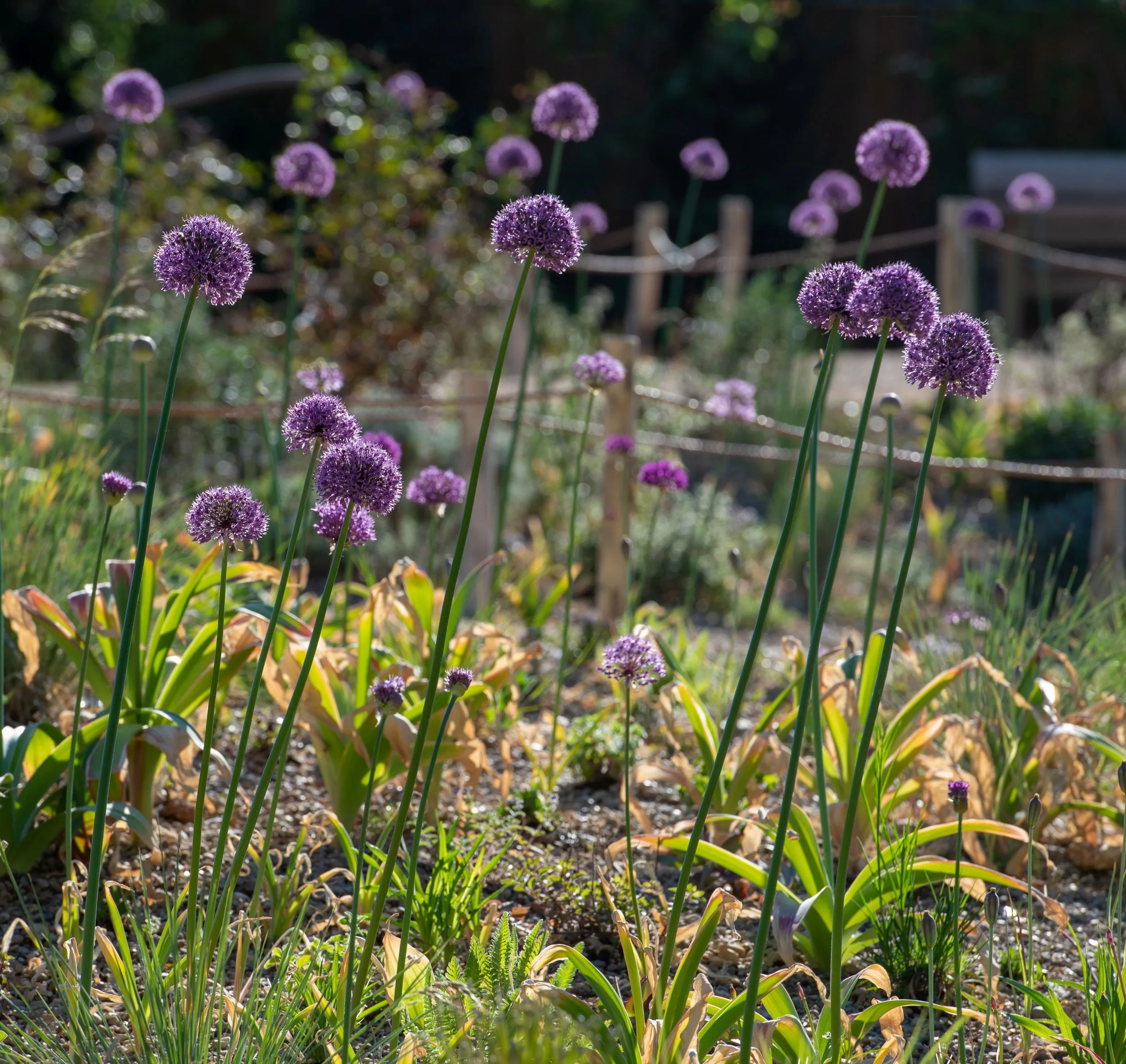
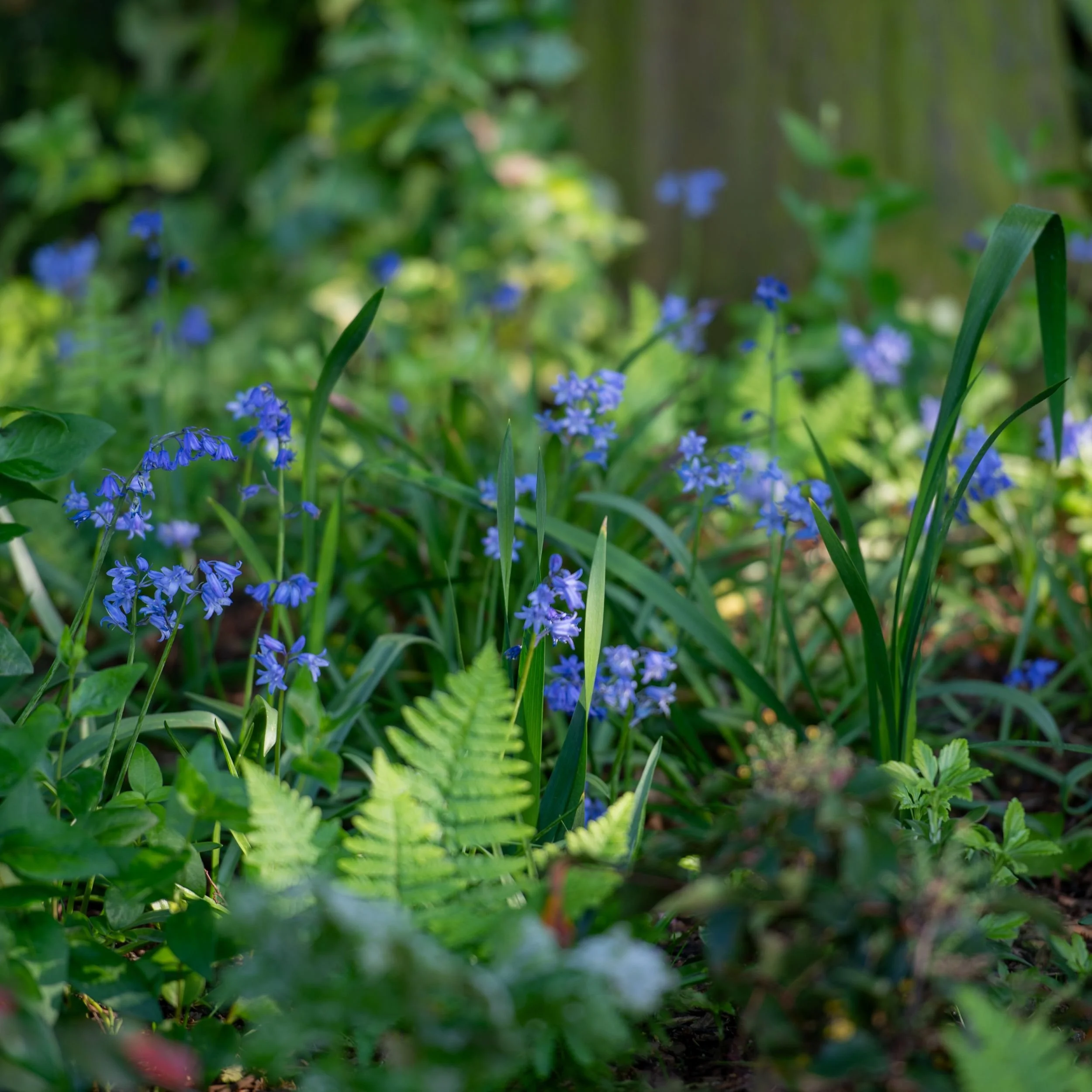
The plants chosen for the garden are wildlife-friendly and designed to create vibrant year-round horticultural display. Many of the plants have a direct connection to Queen Elizabeth II and the places she loved. Lily of the valley – which featured in her coronation bouquet.
More than 40 new trees have been planted, each selected to complement the garden, to be climate-resilient and to provide food and habitat for wildlife. Specimen trees from Commonwealth nations have been used alongside native species.
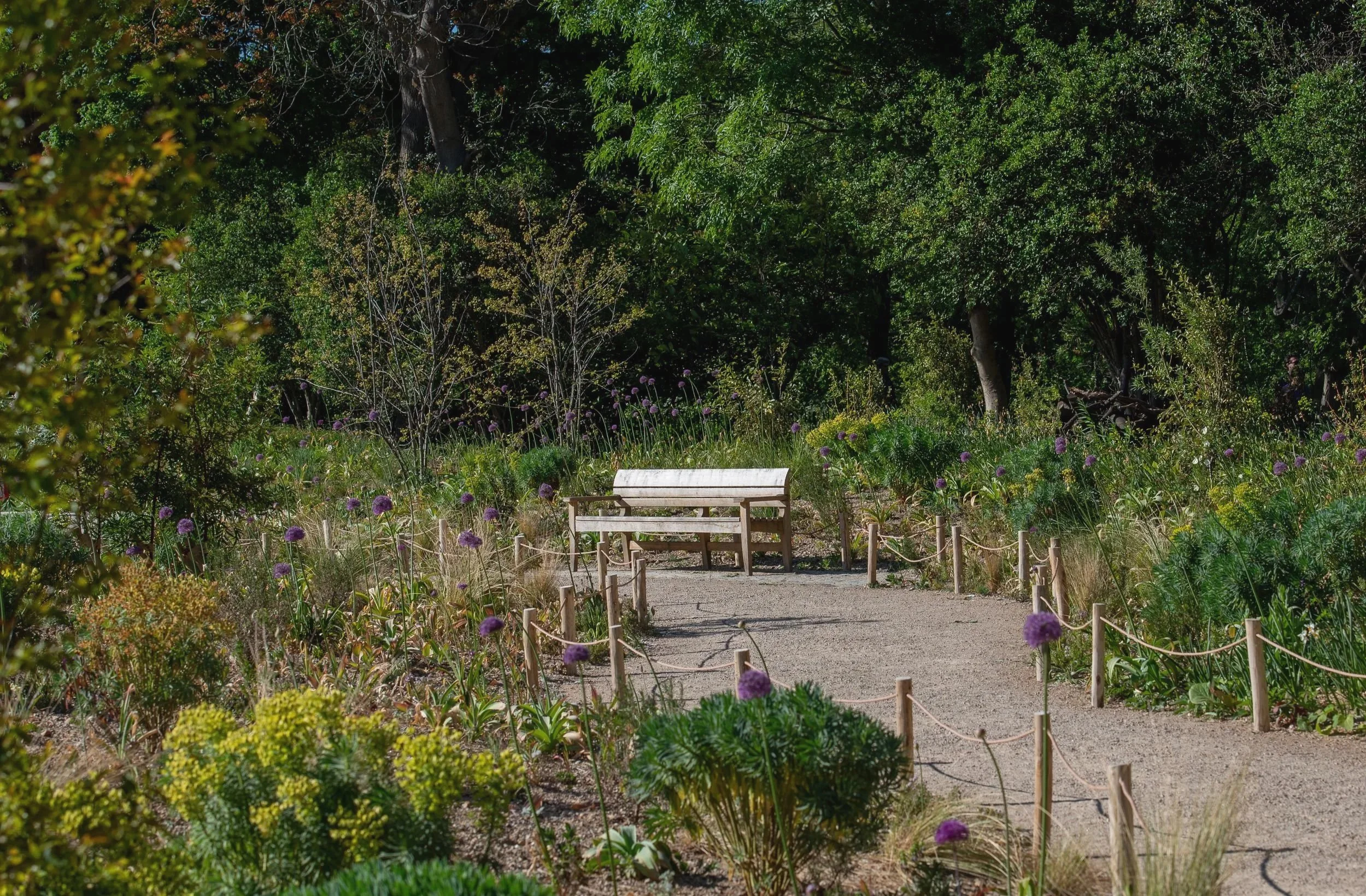
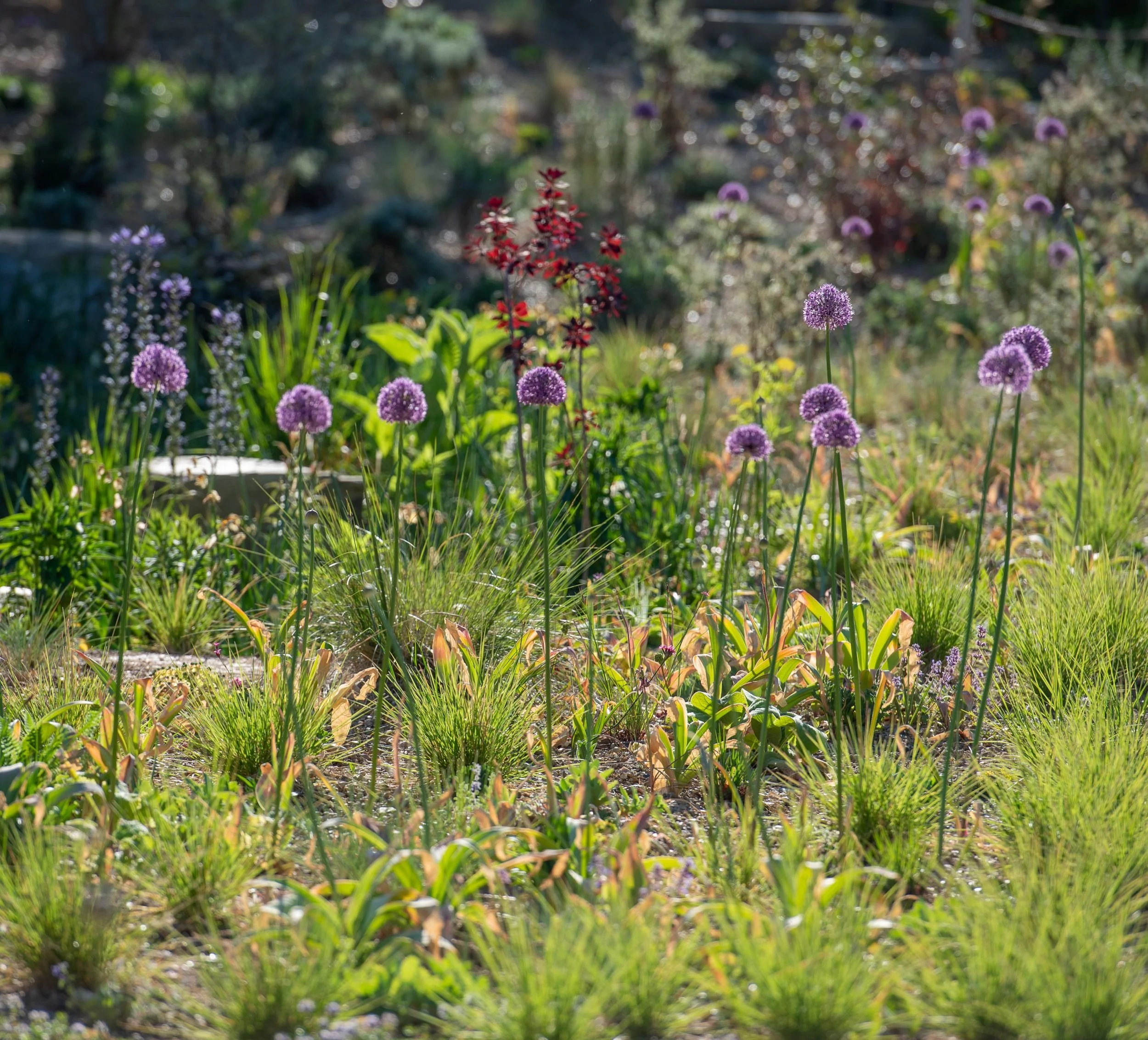
Obviously with a garden this new the plants still have a lot of filling out to do. At the end of a warm sunny April the daffodils and tulips have finished and really the only colour comes from the brilliant purple alliums. The central part of the garden is covered in a deep aggregate of the crushed gravel. It will force the now young plants to send down deep roots to seek out moisture. They will take longer to put on top growth but should be more resilient to heat and dryness.
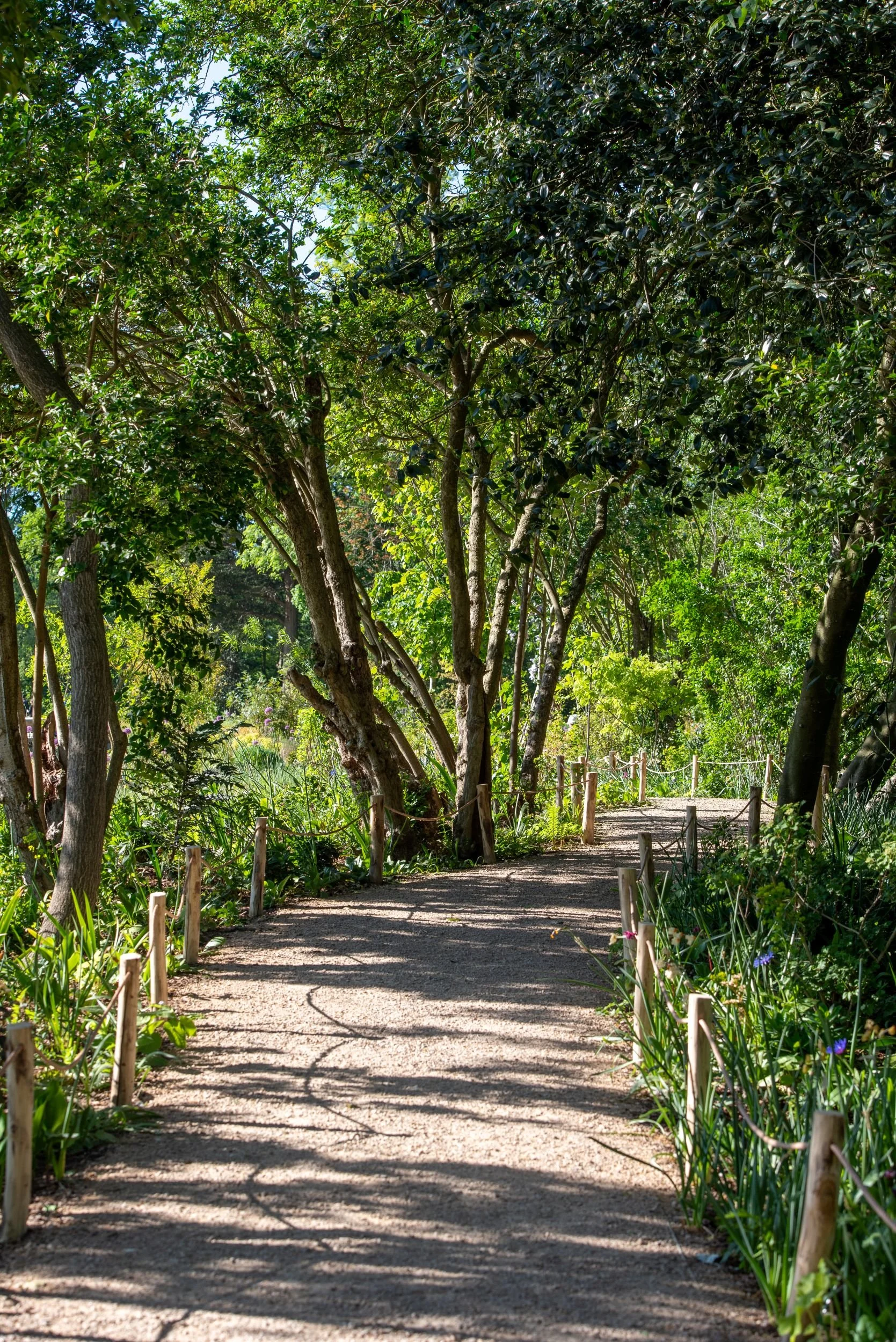
Around the perimeter of the garden there is a lot of shade cast by existing mature trees. These areas are planted up as woodland areas and provide a cool contrast on a hot sunny day.
zWhile we are waiting for the new plants to do there thing there is much to admire with the hard landscaping. The crushed aggregate has been used in several different ways - as a dry mulch, as a compacted gravel path and also made into a terrazzo-looking concrete for some of the paths. Elsewhere, the steps are of new sawn Yorkstone with beautiful textured bricks to mark the end of the steps. A low canyon has been created from quarried stone, complete with chisel markings.
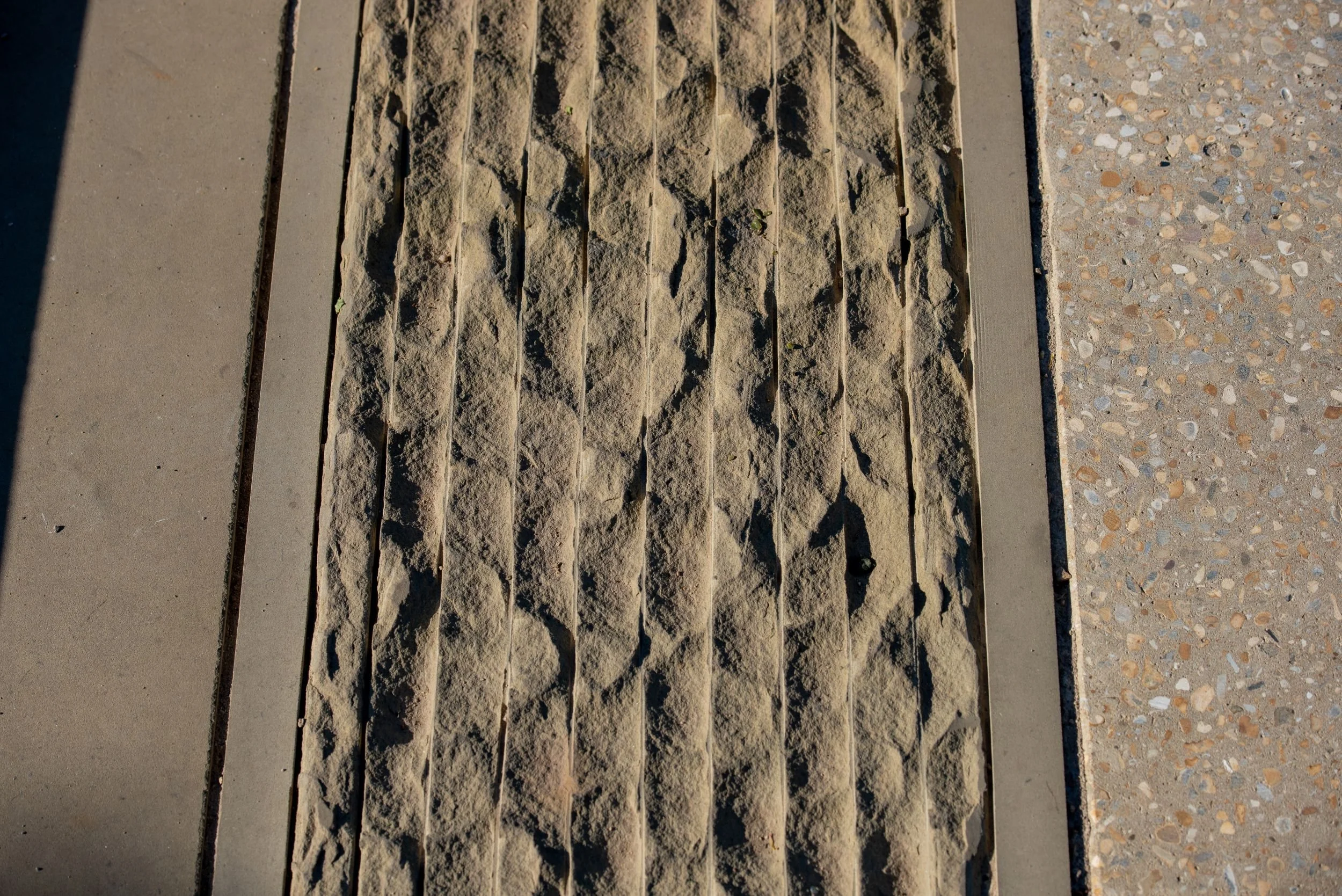
Sawn Yorkstone, textured sandstone tiles, terrazzo

Crushed gravel path, terrazzo
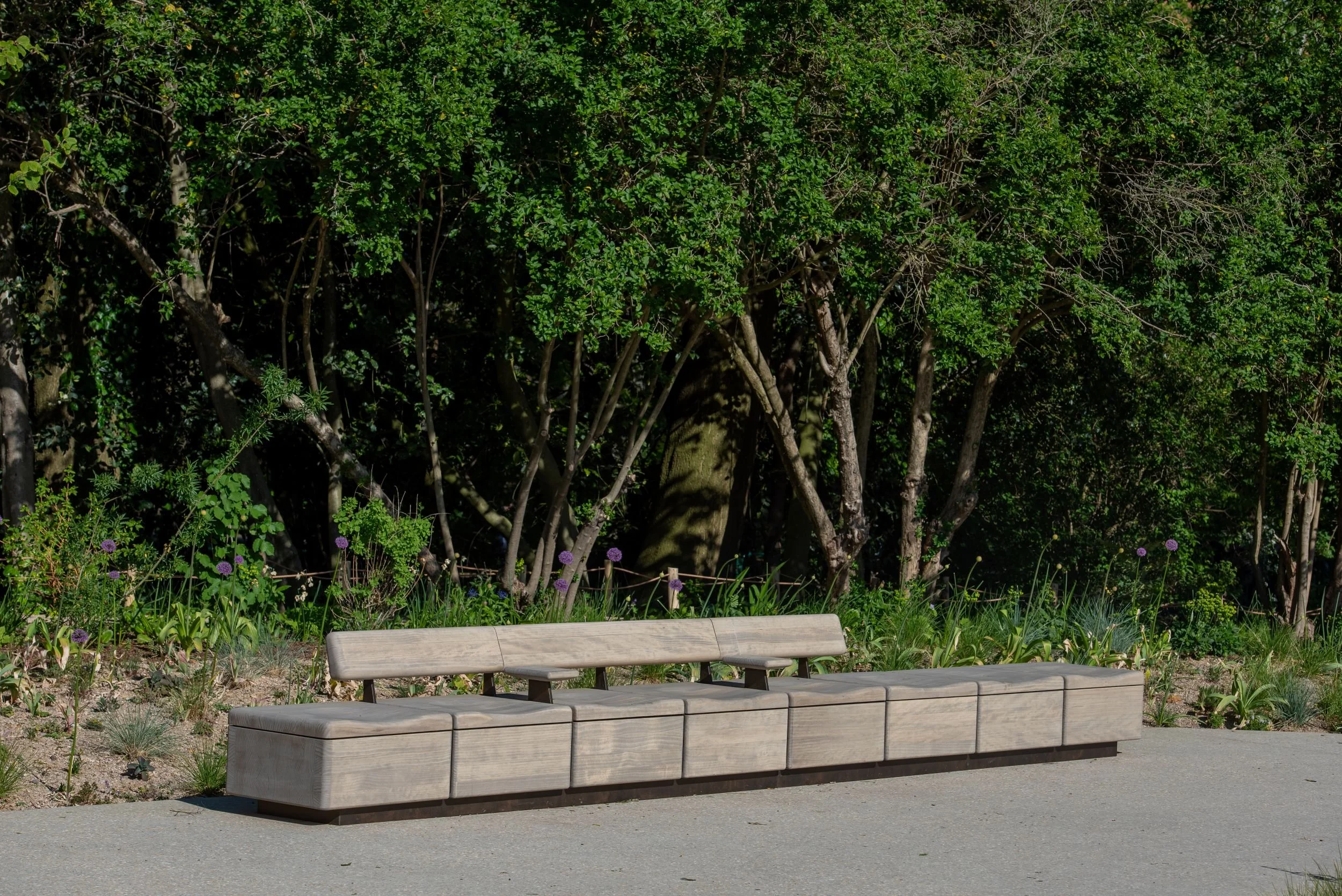
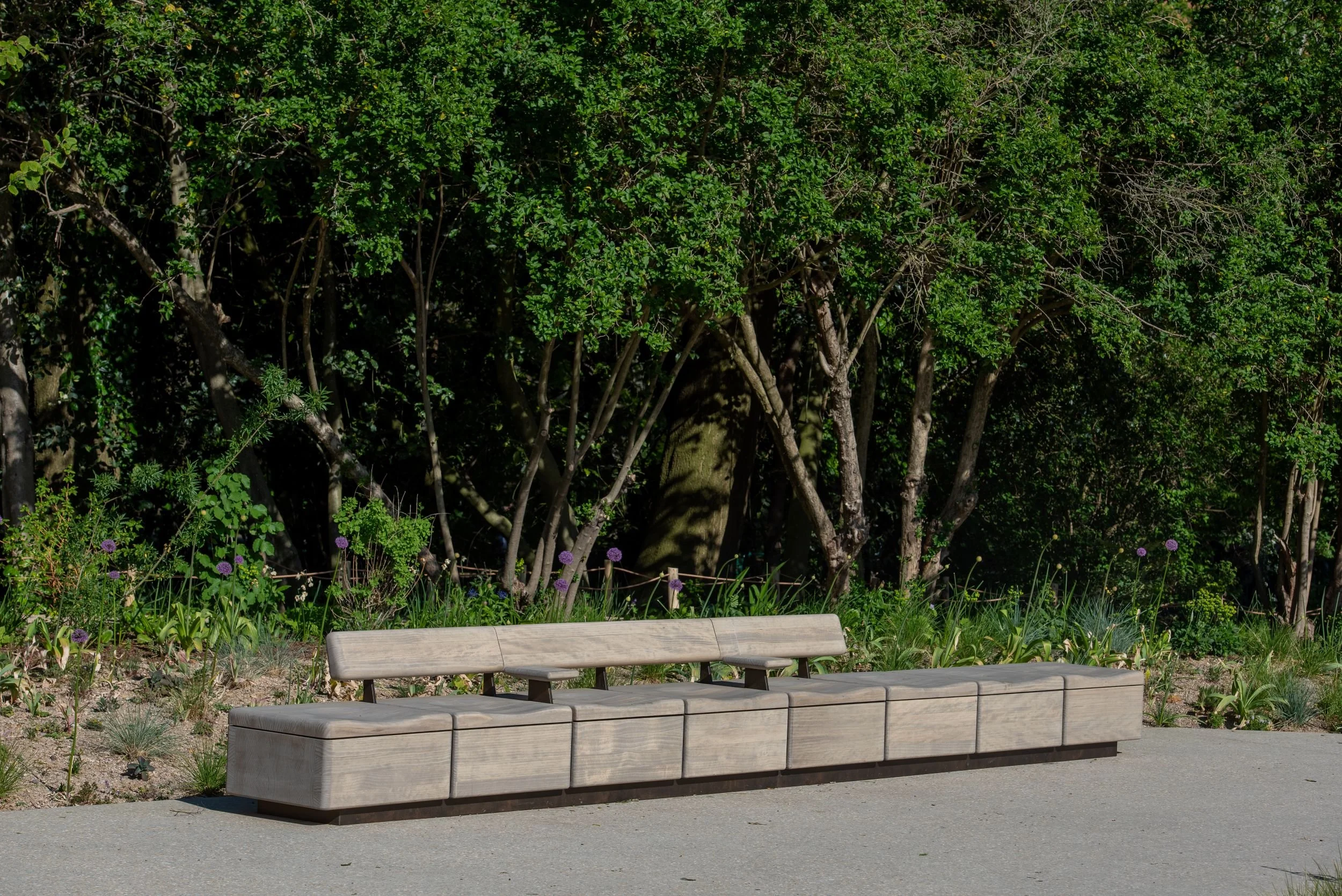
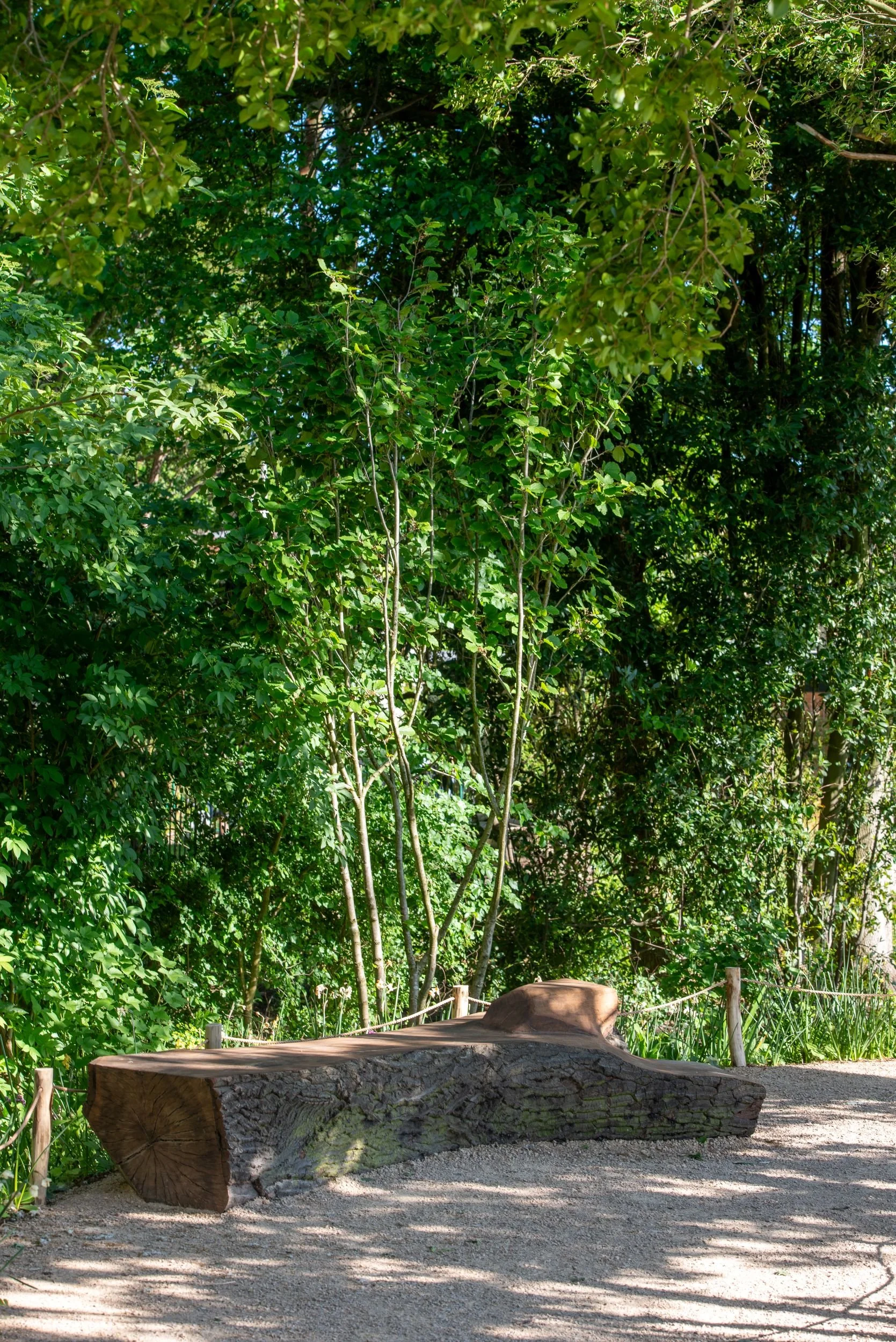
The seating in the garden is also rather nice and there’s also quite a lot of it too.
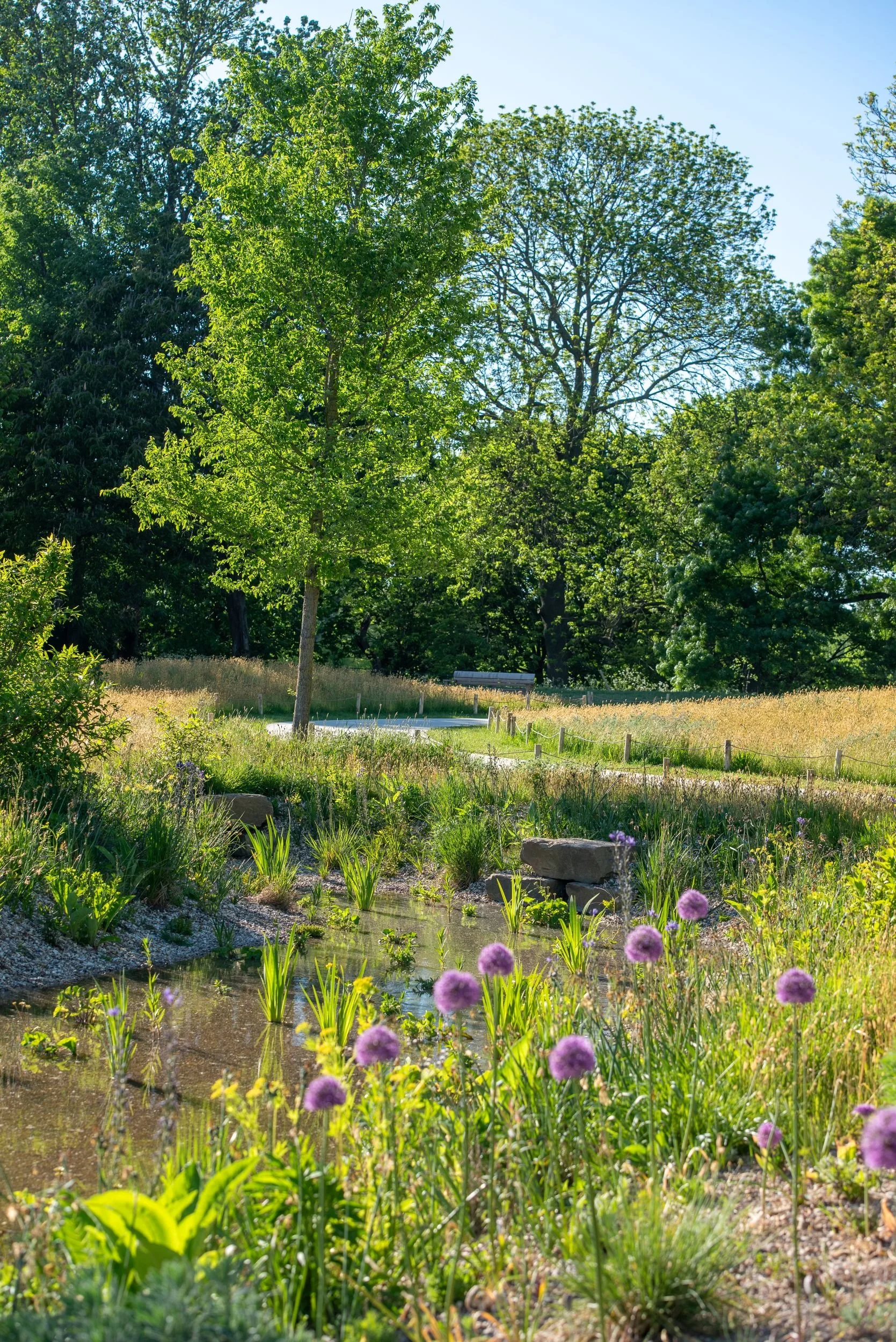
In another acknowledgement of our changing climate, there are a number of swales within the garden. In wet weather they will fill with run-off water which will slowly seep into the surrounding soil. The plants here are adapted to cope with changing levels of damp and dryness. An elegant and cost-effective way of dealing with excess water.
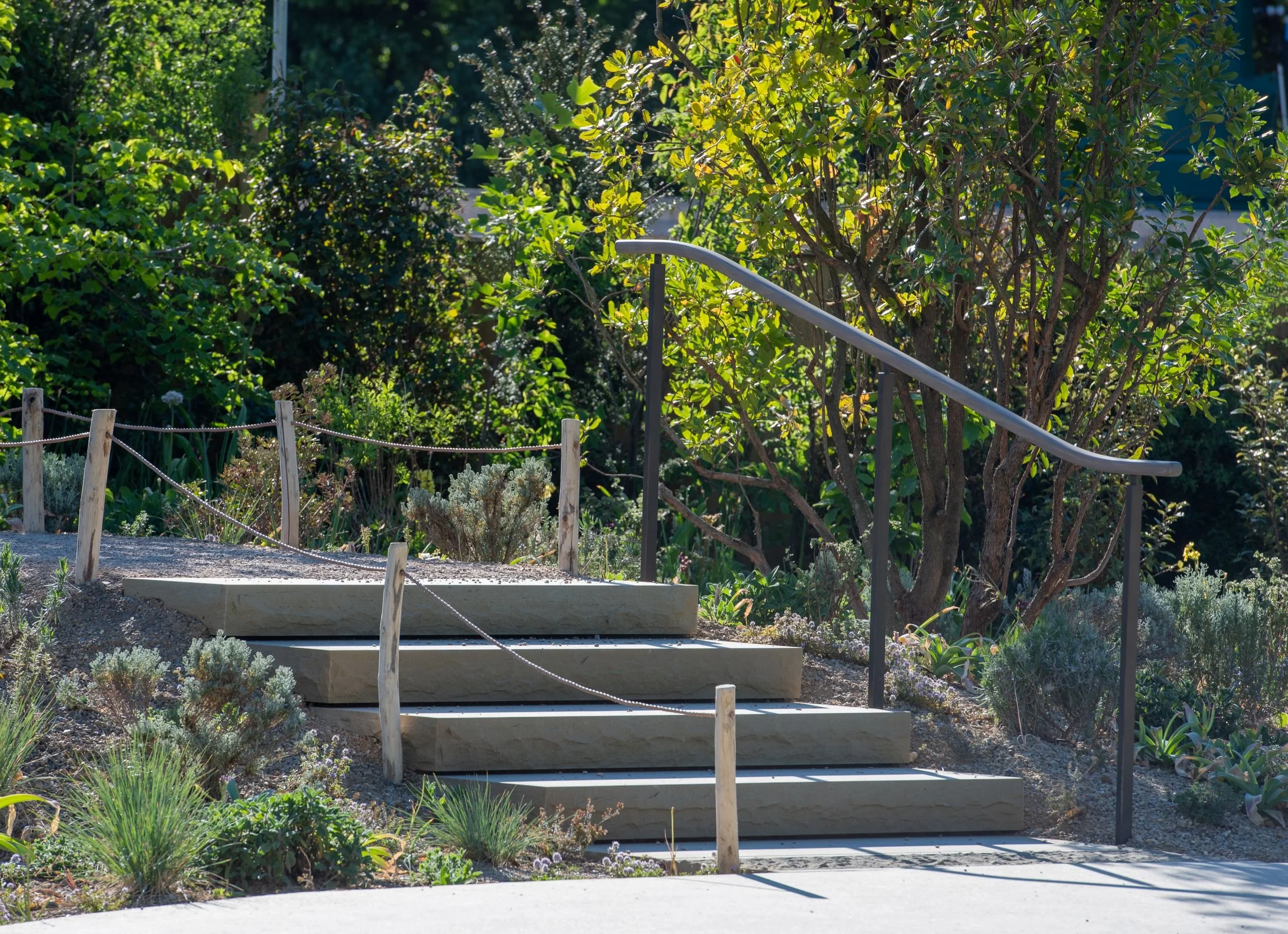
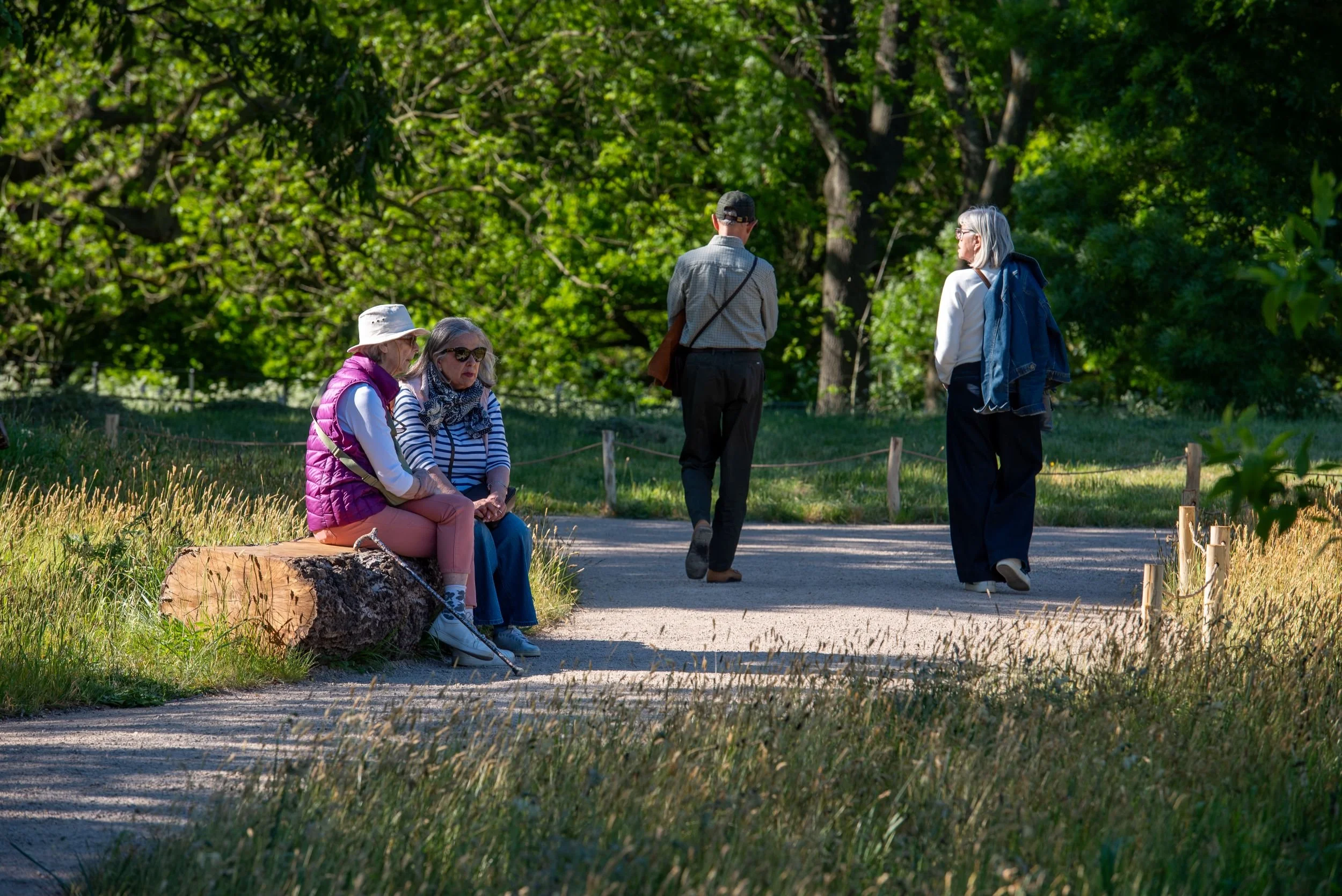
On a sunny weekday in the first week of opening the garden was fairly busy, but not unpleasantly so. Be prepared for queues to get in though if you come on a nice day at the weekend. There are refreshments, a water fountain and toilets just outside the garden.
The garden is free to enter and is open everyday. No dogs are allowed.