
Mental health and well-being benefits of garden design
Recently someone asked me what the health and well-being benefits of a designed garden actually are. It took me a moment to articulate something I'd always taken for granted. Everyone knows gardens are good for you, right? But why?
I've had more than a few client meetings, usually towards the end of a cup of coffee, when someone says, "I just want somewhere I can sit and switch off." Not a wish-list of plants, not a pergola, not even a lawn for the dog. Just somewhere to switch off. I used to think this was a slightly evasive answer. Now I think it might be the most honest one.
But an unplanned garden rarely delivers this. You look out the window and instead of a sanctuary you see a to-do list written in weeds. Thoughtful design is what takes a gardening from a tedious, never-ending list of jobs into a really rewarding way to spend some time.

"I just want somewhere I can sit and switch off."
Why gardening is good for mental health: the evidence
There's plenty of research backing up what our instincts already tell us. Sue Stuart-Smith, whose book The Well-Gardened Mind I've mentioned before, explains why digging in soil does something for the brain that almost nothing else does. Cortisol drops. The soil itself contains microbes (Mycobacterium vaccae) that stimulate serotonin production. And the endless half-attentive fatigue of modern life — what researchers call "directed attention fatigue" — gets a chance to recover through what's known as "soft fascination."
None of this is a surprise to anyone who's spent an hour pottering around and looked up to find their shoulders have dropped two inches.
But here's the bit I find more interesting: a garden that's been designed does this better than one that's just evolved. I don't mean curated within an inch of its life like a Chelsea Flower Show garden. I mean considered. There's a difference between a space you've inherited and one that's been made for you, and your nervous system seems to know which is which.

None of this is a surprise to anyone who's spent an hour pottering around and looked up to find their shoulders have dropped two inches
What makes a garden therapeutic rather than just attractive?
An attractive garden looks good in a photograph. A therapeutic garden feels right when you're standing inside it. The difference lies in a few specific things.
When a space feels chaotic, your brain spends energy processing the visual noise. Clear sight lines and natural focal points give your eyes somewhere to rest, and your mind follows. Then there's what environmental psychologists call prospect and refuge — the hardwired human need to have our backs protected with a clear view ahead. A good designer builds this in without you ever noticing it's there.
The gardens I admire most — Arne Maynard's in Monmouthshire being a good example — always feature a spot that isn't meant for show. A tucked-away corner for a morning coffee, away from the view of the kitchen window. In my own much overlooked London garden I have a seat where I can’t see any buildings and no one can see me. That's a deliberate design decision, and it matters more than people expect.

A space of one’s own (photo: L Cox)
Biophilic design principles in a residential garden
Before you raise your eyes heavenward at those words, bear with me. At its core, biophilic design is simply about connecting people with natural systems. In a residential garden, there are four principles worth understanding.
Connection to Nature
This means designing spaces that immerse you in living systems — layered planting, water features with natural movement, wildlife habitats — so that you feel inside nature, not just looking at it. Do you feel connected to the garden even when indoors?
Natural Patterns and Forms
These draw on the fractals, spirals and organic rhythms of the natural world: curving paths, planting in naturalistic drifts, materials with texture and variation, grasses that move in the wind.
Light and Space
Shows how light moves through a garden across the day and seasons — dappled shade, morning shafts through planting, low evening sun catching grasses — and the contrast between open areas and sheltered enclosures that makes spaces feel instinctively comfortable.
Sensory Richness
Engaging all the senses is rewarding: fragrant planting along paths, the sound of water or wind through grasses, tactile surfaces underfoot, seasonal change that keeps the space feeling alive. Tell me you've never touched the furry leaves of Stachys, bent to smell a rose, or kicked a pile of dry leaves in autumn.

Inviting the outside in
Why "low maintenance" is a mental health feature
If there's a phrase guaranteed to make me raise my own eyes heavenward it's "low maintenance." In the past I’ve taken this to mean “I’m lazy”, “I can’t be bothered”, “I know nothing about gardening and I’m not going to learn now”.
But I’ve come to understand there’s something else going on besides a deep reluctance to garden. A garden that constantly signals neglect — the uncut grass, the border that's got away, the dead-heading you've been meaning to do since forever — creates a low-level guilt that follows you around. You go outside to switch off and the garden hands you a to-do list instead.
A well-designed garden does the opposite. It holds itself. The structure carries the space through the seasons without drama or demand, the planting is chosen because it genuinely wants to be there, and you are free to simply be in it. On a difficult week, that matters enormously.
So when I talk to clients about low maintenance, I'm not talking about saving time. I'm talking about designing a garden that works for you on your worst days as well as your best. A garden you can sit in on a grey Sunday morning and feel, without quite knowing why, that things are alright.
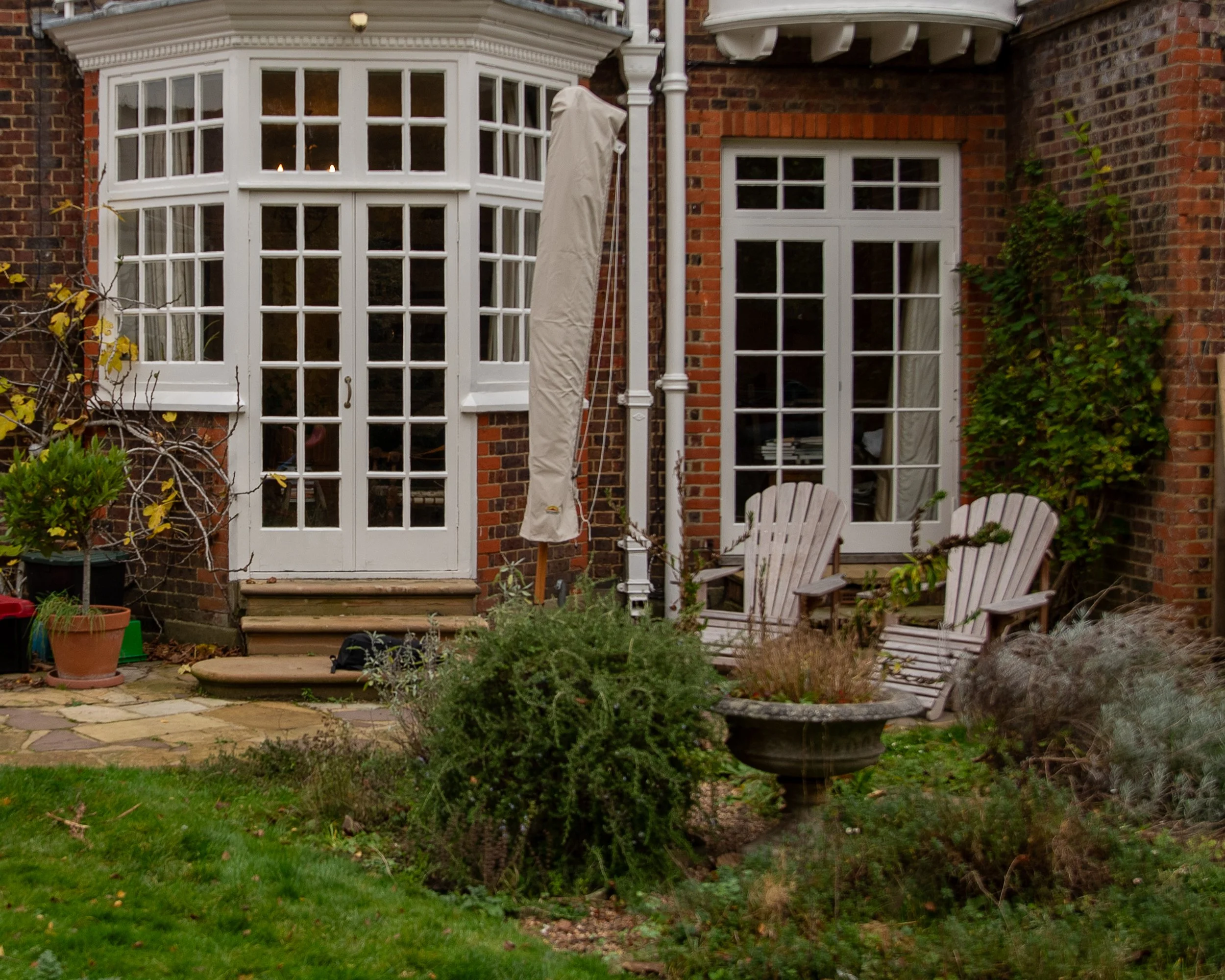
Before - the weeding was never done, the steps and paving were hazardous and the elegant house wasn’t shown to its best advantage
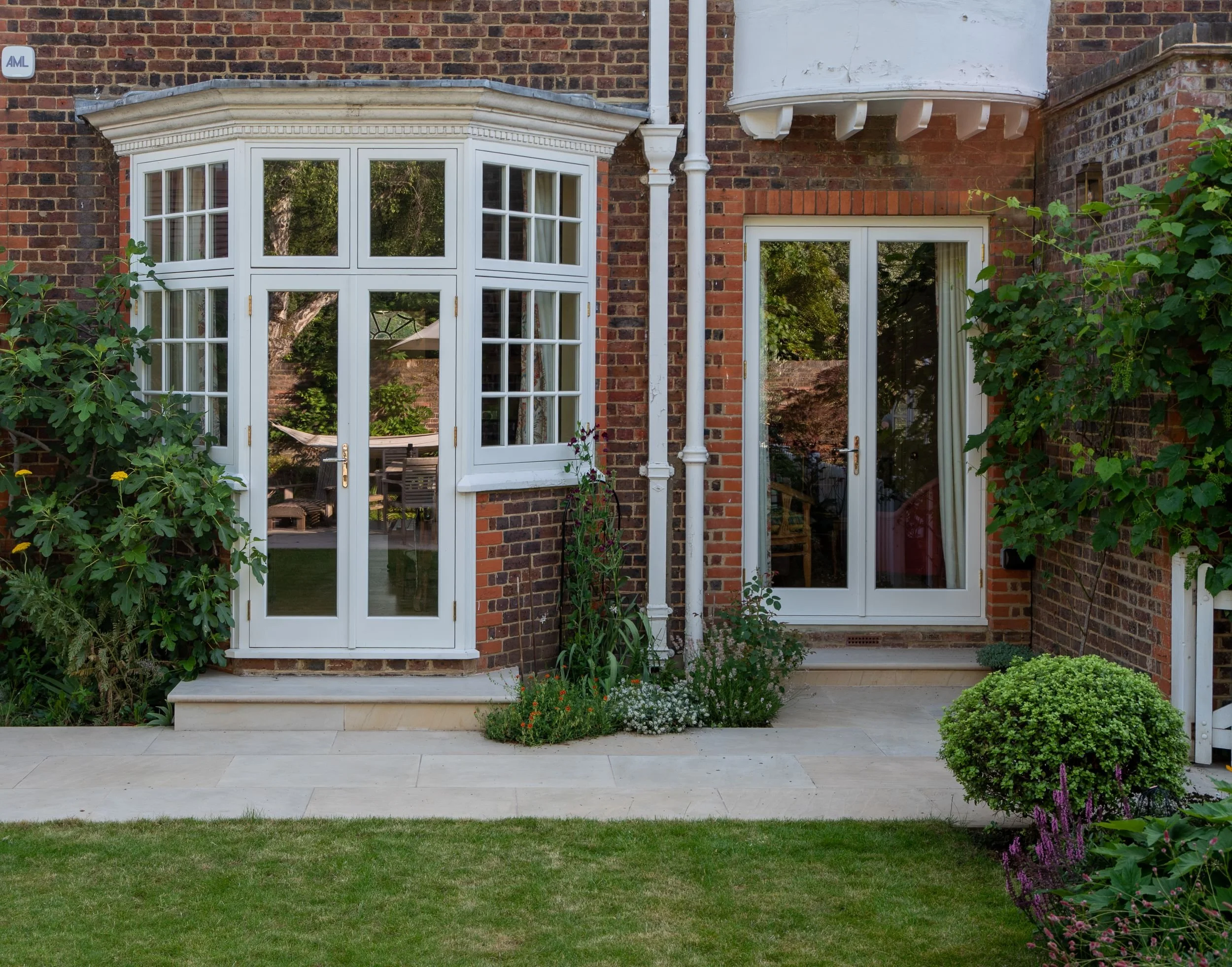
Small but well-thought out changes, big impact.
DIY vs professional design: what actually changes?
It's entirely possible to build a wonderful relationship with a garden you've wrestled into shape yourself. Elspeth Thompson's columns were full of the daily, scruffy reality of gardening — the failures as much as the triumphs — and she'd have been the first to tell you gardens can't fix everything.
But a professional designer fundamentally changes the outcome by resolving structural chaos. Something gets planted because it caught your eye at the garden centre, a path goes in because the lawn was wearing thin, an awkward corner gets quietly ignored. Over time it accumulates into something that functions, more or less, but never quite coheres. We've all had gardens like this.
A designed garden starts from a different place. It anticipates the whole picture rather than reacting to problems as they arise. Planting is led by micro-climate and soil. The layout moves fluidly. And those awkward corners become, in the right hands, some of the most interesting parts of the garden.
There's a social side to this too, easy to overlook when you're picturing the garden as a solitary retreat. A well-placed table that catches the evening sun, a path wide enough for two people, raised beds at a height someone with a bad hip can actually use — these are design choices. The difference between a garden that gets used by the whole family and one that just gets looked at from the sofa.
The difference is between a garden that happened and a garden that was meant.

Before - the only way to the front door was to squeeze past the car, the garden was joyless and literally a waste of space

After - the front door is easy to get to even with a buggy, the view from the study is amazing, walking in and out the front door everyday is a joy and the neighbours stop for a chat. The two gardens take about the same amount of time to look after
Creating your own restorative space
Nobody hires me because they want a reason to go to the gym less. But a well-designed garden draws you out into it — mowing, dead-heading, propping up a leaning rose, having a poke about to see what's coming up. It's moderate activity dressed up as pottering, which is probably the most sustainable kind of exercise there is, because you don't notice you're doing it.
None of this is to say a wild, unplanned garden can't be good for you — plenty of the best ones are. But there's something particular about a space made with intention, where the awkward corners have been solved rather than ignored, and where there's somewhere to sit that actually wants you to sit there.
Which is, I suspect, what most people mean when they ask for somewhere to switch off.

The awkward corners have been solved rather than ignored
Frequently Asked Questions
Is gardening good for mental health?
Yes, unequivocally. Engaging with soil exposes us to beneficial microbes, while the repetitive, rhythmic tasks of weeding, pruning, and planting encourage a state of mental flow, reducing anxiety and rumination.
How does gardening improve mental health?
Gardening improves mental health by lowering cortisol levels, reducing blood pressure, and combating "directed attention fatigue" caused by modern screens. It provides gentle physical exercise and fosters a meaningful connection to natural seasonal cycles.
What is a wellbeing garden?
A wellbeing garden is an outdoor space intentionally designed to support physical, emotional, and mental health. Unlike standard gardens, it prioritises elements such as low cognitive load, sensory engagement, security, ease of movement, and quiet places of refuge.
Does a garden need to be big to be therapeutic?
Not at all. A courtyard, a small urban terrace, or even a well-arranged balcony can function as a therapeutic space. What matters is the intention behind the layout, the correct choice of plants, and the creation of a sense of privacy and comfort.